Article
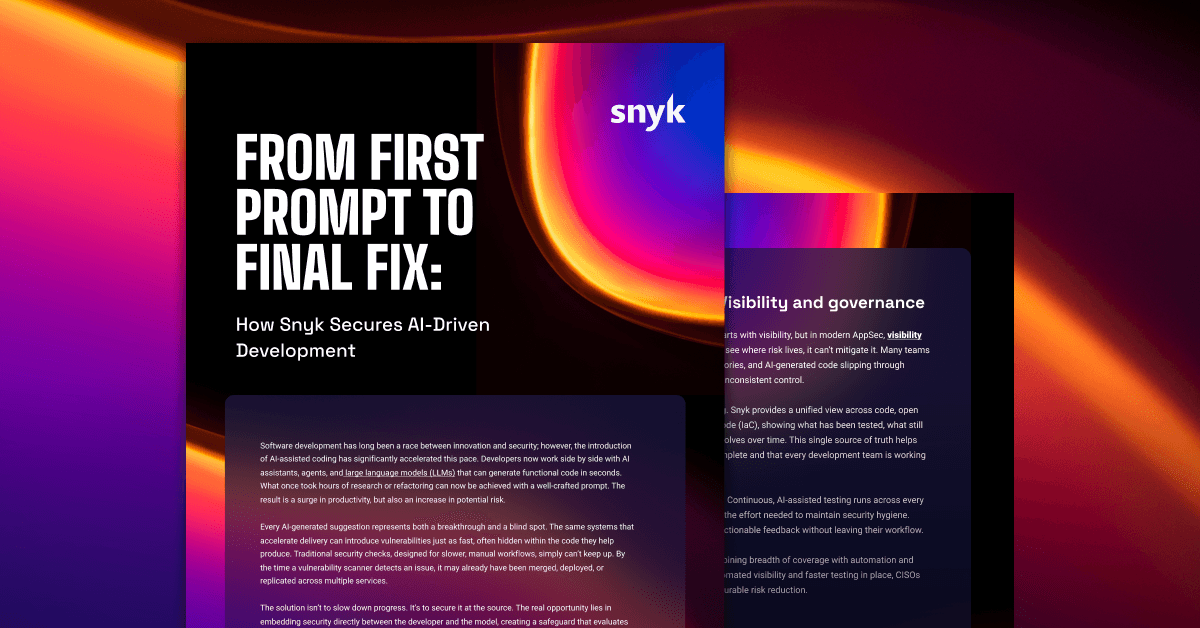
Inside the 'clawdhub' Malicious Campaign: AI Agent Skills Drop Reverse Shells on OpenClaw Marketplace
Read nowShowing 337 - 358 of 358 resources





How to respond to a newly discovered vulnerability
Learn how to effectively respond to newly discovered vulnerabilities with a structured approach using the Vulnerability Management Cycle. Discover the importance of tools like Snyk for centralizing, analyzing, and remediating vulnerabilities across your software development lifecycle.



JavaScript Static Analysis with ESLint and Biome
Biome, a new tool in the JavaScript ecosystem, combines code formatting and quality linting. It offers speed and performance advantages over traditional tools like ESLint and Prettier, making it a compelling alternative. With its integration into development environments like VS Code and potential adoption by major projects, Biome is poised to reshape the way JavaScript developers approach code quality and formatting.

Oops I built a feature and created an Open Redirect Vulnerability in a Deno app
Build your first Deno web application with a step-by-step guide. Learn how to implement a redirect feature while avoiding common security pitfalls like open redirect vulnerabilities. Secure your Deno app with best practices and discover how to set up a Deno development environment in GitHub Codespaces.

How Snyk Helps with the OWASP Software Assurance Maturity Model
Read how the OWASP Software Assurance Maturity Model (SAMM) and Snyk can work together to provide an effective approach to measuring, managing, and improving your software security. Learn about the key benefits, practical implementation steps, and the specific tools offered by Snyk to support your organization's security journey.


Decoding CVEs: A practical guide to assessing and mitigating security risks
Let's explore the world of Common Vulnerabilities and Exposures (CVEs) with step-by-step examples of evaluating if a CVE impacts your project and pragmatic strategies for effective mitigation. This guide will empower you to tackle security vulnerabilities head-on. Don't let CVE warnings go unnoticed — learn how to address them confidently and efficiently.

Top 10 npm power-user commands every JavaScript developer should know
Master essential npm commands to streamline your JavaScript development. Whether it's dependency management or security enhancements, you can boost efficiency and protect your projects. Learn how to leverage npm ls, npm why, npm run, and more to elevate your npm skills today.

How Snyk uncovers libuv CVE-2024-24806 SSRF vulnerabilities in the Node.js project
Node.js is a powerful and widely used runtime that allows developers to build scalable and high-performance applications using JavaScript. However, many developers might not realize that Node.js relies heavily on several third-party open-source components to function effectively. Key among these components are libuv, OpenSSL, and V8

How to prevent prototype pollution vulnerabilities in JavaScript
Safeguard your JavaScript applications from prototype pollution vulnerabilities. Learn how to prevent attackers from infiltrating object prototypes with malicious code, jeopardizing your data and application security. Read about effective strategies, leverage Snyk's potent tools, and shield your JavaScript projects from this critical threat.

How to secure Node.js applications from Open Redirect vulnerabilities
Secure your Node.js applications from Open Redirect vulnerabilities. Learn how to prevent malicious redirection attacks, protect user data, and maintain a strong security posture. Discover best practices, tools like Snyk, and actionable tips to safeguard your Node.js apps.