Report
Snyk named a Leader in The Forrester Wave™: Agentic Development Security Tools (Gated)
Learn why Snyk was named a Leader in The Forrester Wave™: Agentic Development Security Tools, Q4 2026.
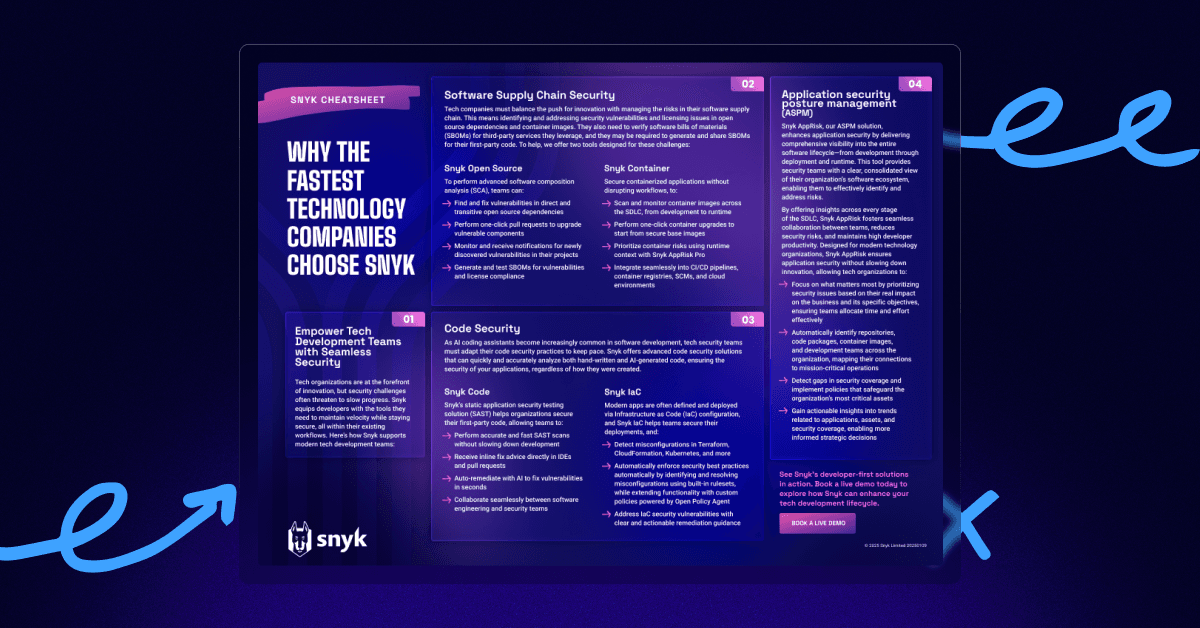
Cheat Sheet
Cheat Sheet
Video
Report
Showing 457 - 480 of 756 resources
Is TypeScript All We Need for Application Security?
What are the security controls and fallacies in TypeScript security? Securing TypeScript applications involves a multi-layered approach.
Open Source Security in 2024
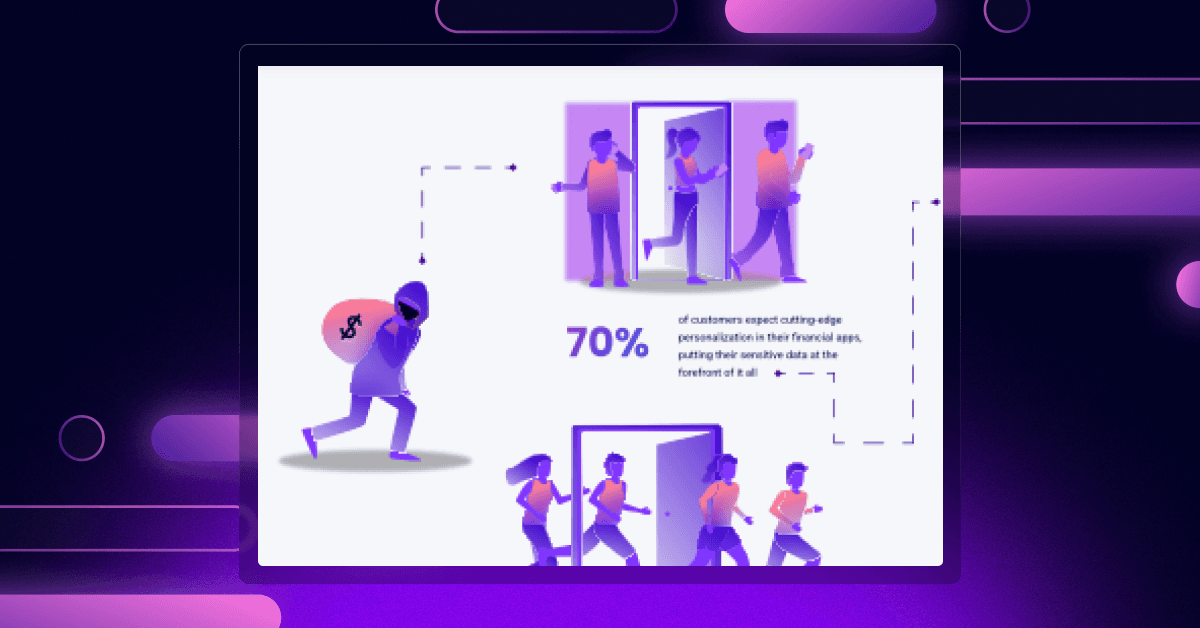
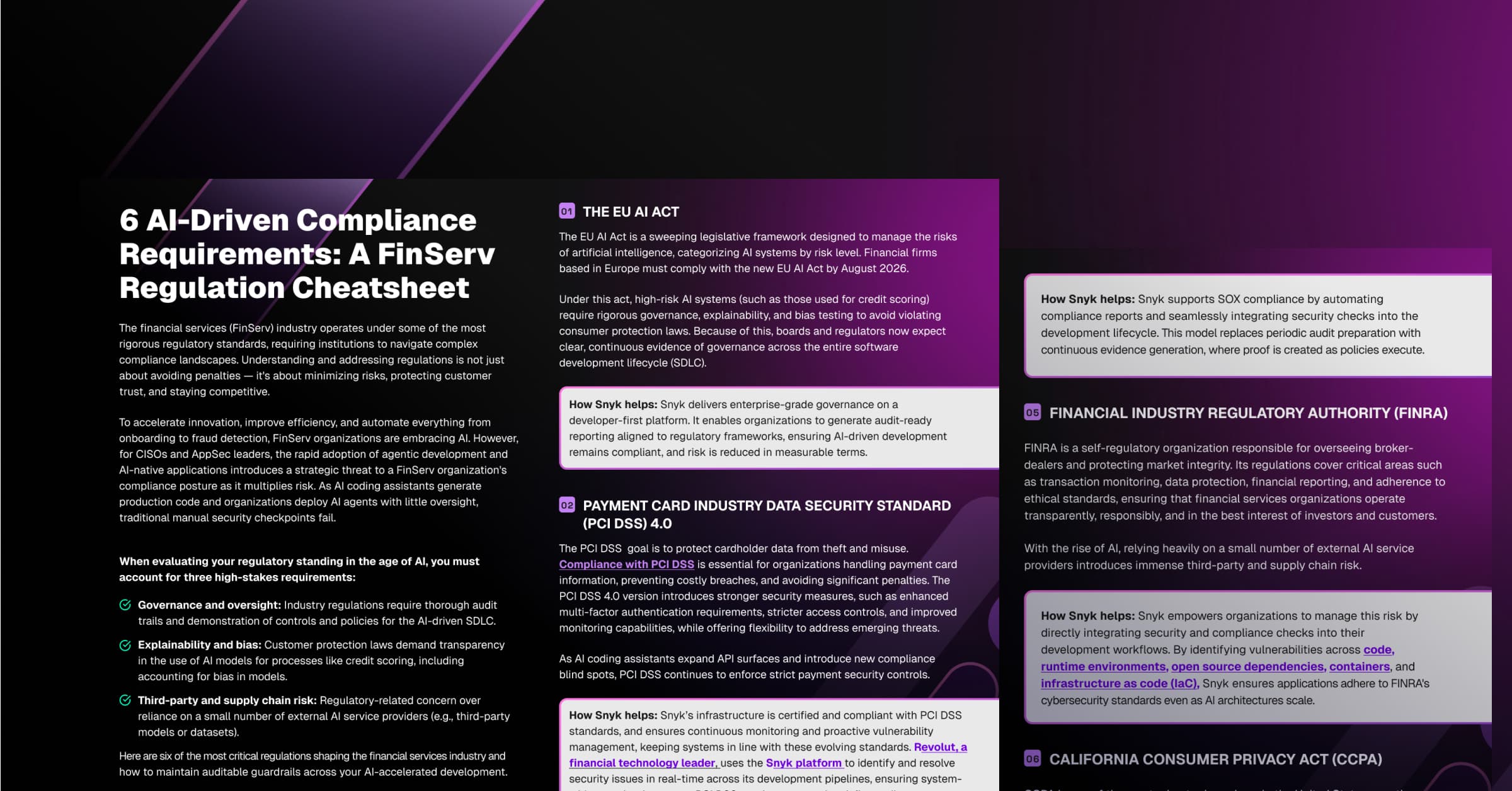
Defending your FinServ Application Against Modern Threats Infographic
Thank you for checking out our infographic on securing your FinServ Applications! To learn more, download our Optimizing AppSec in FinServ eBook.
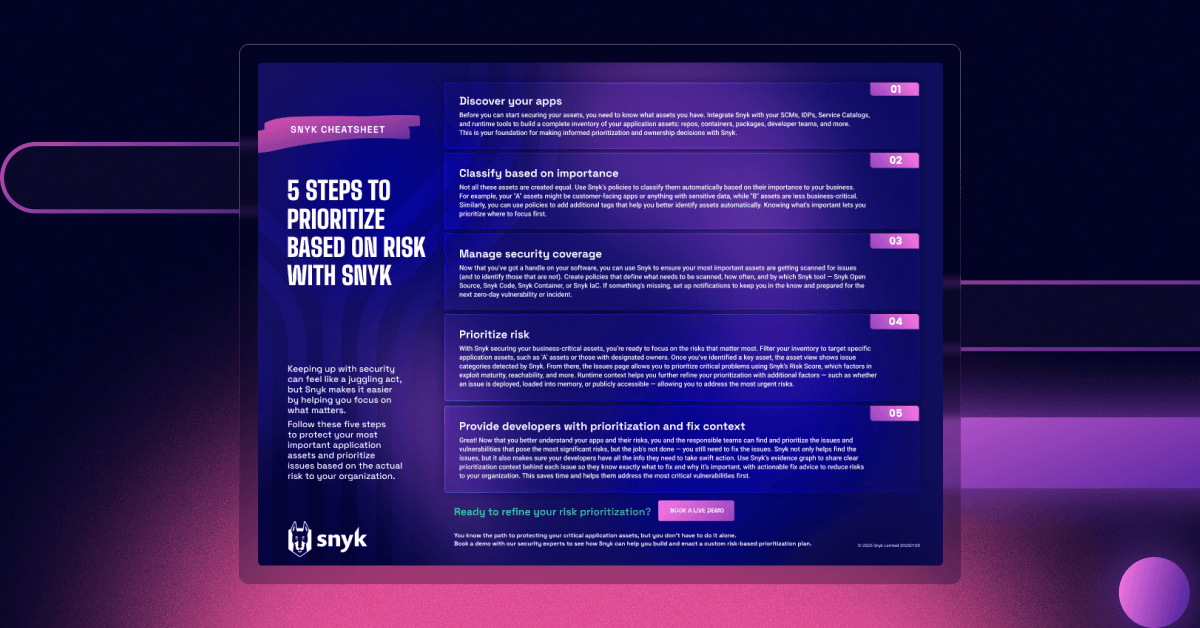
5 Steps to Prioritize Based on Risk with Snyk - Risk-Based Prioritization Cheat Sheet
Keeping up with security can feel like a juggling act, but Snyk makes it easier by helping you focus on what matters. Follow these five steps to protect your most important application assets and prioritize issues based on the actual risk to your organization.
Can Machine Learning Find Path Traversal Vulnerabilities in Go? Snyk Code Can!
Explore how Snyk’s machine learning-powered security tools tackle path traversal vulnerabilities in Golang code. Learn how to secure your Go applications and challenge yourself to detect and exploit vulnerabilities like a pro!

Understanding Server-Side Template Injection in Golang
SSTI can open the door to escalating security risks such as file inclusion, Cross-Site Scripting (XSS), or even Code Injection Attacks.
Golang SQL Injection By Example
Learn how to prevent SQL injection in Golang applications by using prepared statements and parameterized queries and leveraging tools like Snyk for vulnerability detection.

The Importance of Code Quality
Code quality is crucial for building high-quality, secure applications. Learn more about code quality, secure development, and Snyk’s code checker.
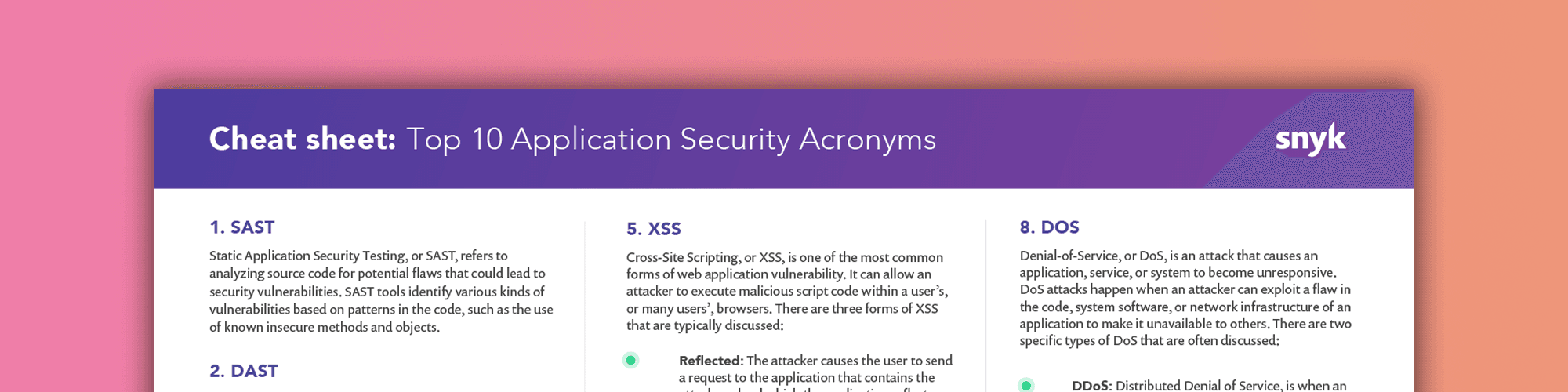
Top 10 application security acronyms
Read all about AppSec acronyms you need to know to be able to freely discuss the results of a recent penetration test or static analysis of the code.

A deep dive into cyber threat intelligence
As companies continue to adopt cloud native technologies, nearly 60% have increased concerns about their security posture.
Docker Security - Challenges & Best Practice
Docker security is the practice of protecting containers, applications, host systems, and anything else related to Docker. Learn more with our full guide.
AWS security: Complete guide to Amazon cloud security
What is AWS security? How secure is AWS? Explore Snyk’s top tips to help you secure your AWS deployments, and maintain visibility of your AWS resources in development and production.
Top 10 Node.js Security Best Practices
Read about five major Node.js security risks and the top ten best practices you can implement to address them and stay secure while building applications.

Java Security Explained
Learn about the basics of cybersecurity in the Java Security ecosystem, including cryptography, application authentication, and more.

Threat Intelligence Lifecycle | Phases & Best Practices Explained
Learn about the different phases of the threat intelligence lifecycle, as well as best practices for each phase.

What is technical due diligence (TDD)?
Technical due diligence is an in-depth analysis of the state of a company from a technical perspective, including its products, infrastructure, and more.

Everything You Need to Know to Get Started With Container Security
Read about the basics of container security across ecosystems and how to secure your container from build to runtime. Learn essential terminology and have your questions answered.
Three Steps to Container Image Security
Follow our practical guide to container security, developed in partnership with Docker. 3 Essential steps to run your containers securely.

Web Application Security Explained: Risks & Nine Best Practices
It’s vital for Developers to have knowledge of web application security so they can secure web apps as they’re developed, reducing the burden on security teams.
What is container orchestration?
Orchestration refers to automating container deployment, operations, and lifecycle management. This approach automates how we provision, deploy, scale, monitor, replace, and manage storage for our running containers.

Kubernetes Monitoring Guide
Learn everything you need to know about Kubernetes monitoring: tools, best practices, critical metrics you should track, and more.