4 Reasons Why CTFs Are One of the Best Ways to Grow in Cybersecurity

January 27, 2026
0 mins readIf you're trying to figure out what area of cybersecurity actually excites you, or you just want to get better at what you already do, Capture The Flag (CTF) competitions are honestly one of the best places to start.
Compete in Fetch the Flag 2026!
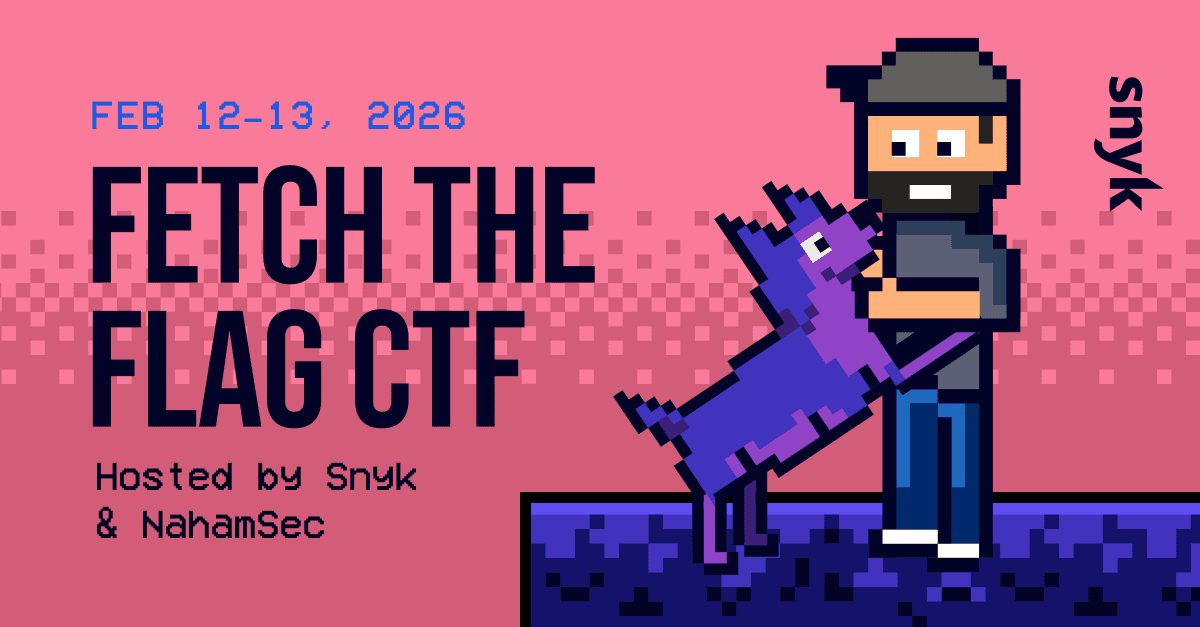
Test your skills, solve the challenges, and dominate the leaderboard. Join us from 12 PM ET Feb 12 to 12 PM ET Feb 13 for the ultimate CTF event.
1. You'll discover interests you didn’t know you had
CTFs have a way of throwing you into challenges you would have never sought out on your own. I've always been drawn to web hacking. That's my comfort zone. But through CTFs, I've found myself picking locks at on-site events, digging through mobile challenges, going down OSINT rabbit holes, and even dabbling in binary exploitation. Some of it stuck, some of it didn't, but I never would have explored any of it if a CTF hadn't put it in front of me.
That exposure is invaluable. Instead of spending months wondering if you'd enjoy reverse engineering or forensics, you get a taste of it during a weekend. It compresses your learning experience in a way that's hard to replicate otherwise.
2. You learn by doing (and then by seeing how others did it)
There's something uniquely effective about the CTF learning cycle. You sit with a challenge, bang your head against it, maybe solve it, maybe you never do. Then the competition ends, and the write-ups start getting published.
That's where the real learning happens. You get to see how other people approached the same problem: what tools they used, what assumptions they made, and which rabbit holes they avoided. Sometimes you were on the right track and just missed one small thing. Other times, you realize you were thinking about it completely wrong. Either way, you walk away sharper than before.
3. You build a team (and a network)
CTFs are a team sport for most of us. And the teams you build can come from anywhere: coworkers you've collaborated with before, friends you've never actually worked alongside, or complete strangers you met in a Discord server. There's something about solving problems together under time pressure that builds real connections. You learn how people think, who's good at what, and how to divide and conquer effectively. Those relationships often extend well beyond the competition itself, into job referrals, collaboration on research, or just having people to bounce ideas off when you're stuck on something at work.
4. The challenges have gotten better
One of the best shifts I've seen in the CTF world over the past few years is the move away from "guessy" challenges toward more realistic scenarios. Challenge authors are increasingly drawing from real-world vulnerabilities, recent research, and actual bug bounty findings.
This means the skills you're building in a CTF are directly transferable. You're not just learning how to solve deliberately confusing puzzles; you're learning techniques that show up in the real world. It's become a genuinely effective way to stay current with new attack vectors and how to fix them properly.
Final thoughts
CTFs won't teach you everything, and they're not a substitute for hands-on experience in a real environment. But they're one of the best low-risk, high-reward ways to explore the field, build skills, and connect with people who share your interests.
If you haven't tried one yet, find a beginner-friendly competition and jump in. You might surprise yourself with what you enjoy! Register today to compete in Fetch the Flag on February 12–13, 12 PM ET to 12 PM ET.
New to Capture the Flag (CTF)?
CTFs are hands-on security challenges where you learn by solving real-world hacking scenarios. Watch the CTF 101 workshop on demand, then put your skills to the test in Fetch the Flag on Feb 12–13, 2026 (12 PM–12 PM ET).