Industry-validated leadership | ✔ ONLY VENDOR RECOGNIZED AS A LEADER ACROSS ALL MAJOR ANALYST EVALUATIONS Snyk is the only vendor named a Leader across Gartner, Forrester, and IDC evaluations for AppSec. | ✘ NOT AN ESTABLISHED INDUSTRY LEADER Aikido was named a Major Player in the 2025 IDC MarketScape for Application Security Posture Management, but has not been included in other major AppSec analyst evaluations. |
| ✔ DEEP, RELIABLE DETECTION WITH COMPLETE VISIBILITY Snyk delivers accurate, consistent analysis across the entire SDLC using proprietary detection engines backed by Snyk Security Research. Snyk provides a complete, trusted view of exposure by unifying risk signals, helping teams clearly understand what matters, where it exists, and how to fix it. | ✘ INCONSISTENT DETECTION DEPTH AND VISIBILITY Aikido relies primarily on open source scanners, resulting in uneven detection quality and depth across scan types. This variability can leave teams with a partial or inconsistent view of risk, making it harder to understand true exposure across applications and environments. |
Developer adoption & productivity
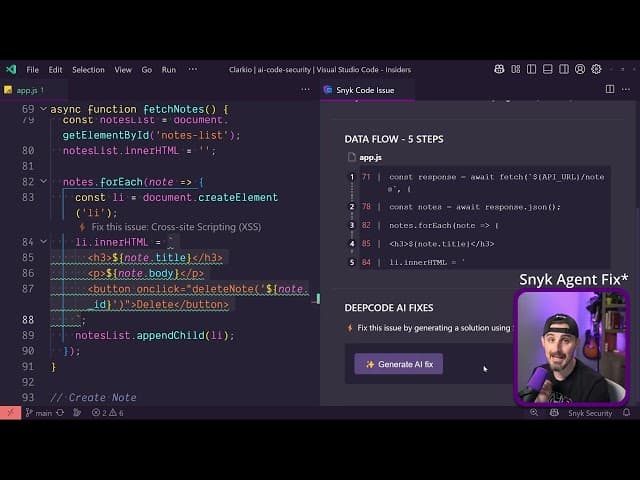
| ✔ SECURITY THAT FITS HOW DEVELOPERS WORK Snyk brings real-time security directly into IDEs, PRs, and CI/CD pipelines, with AI-powered fix guidance that preserves developer workflow. This drives adoption, reduces remediation time, and helps teams build sustainable DevSecOps practices. | ✘ INCONSISTENT GUIDANCE TIED TO OSS TOOLING
Aikido offers basic developer integrations, but scan speed, output quality, and fix recommendations vary based on the underlying open source tool. This inconsistency can slow remediation and create friction for developers, especially as teams and projects scale. |
| ✔ MULTI-SIGNAL PRIORITIZATION FOR REAL-WORLD RISK Snyk uses a multi-signal approach – including reachability, exploitability, dependency context, and fix availability – to surface the vulnerabilities that matter most. This transparent approach helps teams focus effort where it reduces real risk and accelerates remediation. | ✘ LIMITED CONTEXT FOR UNDERSTANDING TRUE RISK Aikido’s auto-triage relies primarily on SAST reachability, which can suppress visibility rather than clarify risk. Important issues may be overlooked or require manual review to fully understand their impact. |
| ✔ ENTERPRISE-READY GUARDRAILS AND CONTROL Snyk delivers governance that enables consistent policy enforcement, auditability, and controlled access across teams and environments. Designed to scale, Snyk supports secure development from small teams to large enterprises. | ✘ LIGHTWEIGHT GOVERNANCE FOR SMALLER TEAMS Aikido offers limited governance capabilities, with minimal policy controls and workflow support. As organizations and codebases grow, teams may need to rely on additional tooling or manual processes to achieve appropriate oversight. |
| ✔ PURPOSE-BUILT AI SECURITY AND GOVERNANCE Snyk enables secure AI-assisted development with guardrails, AI risk registries, and agent-driven workflows. Teams can confidently adopt AI coding tools while maintaining consistency, compliance, and secure-by-default practices. | ✘ NO AI GOVERNANCE OR GUARDRAILS Aikido’s AI functionality focuses primarily on generating fix suggestions. Without AI risk tracking, guardrails, or agent-driven workflows, teams may lack the controls needed to safely scale AI-assisted development. |
Compliance with industry regulations | ✔ COMMITTED TO INNOVATIVE, TRUSTWORTHY SECURITY Trust is paramount at Snyk. We uphold ISO 27001, SOC2 Type II, and GDPR compliance, and are authorized at the FedRAMP Moderate Impact Level. | ✘ COMPLIANT ACROSS FEWER INDUSTRY STANDARDS Aikidio holds fewer voluntary compliance certifications, including FedRAMP authorization. Snyk’s Trust Center showcases our robust and exemplary commitment to customer trust and data privacy. |