Expore all resources

  • Cheat Sheet

    5 Reasons Security Fixes Don't Get Merged | Snyk

    Read now
  • Video

    Snyk & Anthropic: Preparing for the Coming Wave of Autonomous Attacks

    Read now
  • Report

    The Automated AI Attacks Playbook: How to Prepare for the Coming Wave

    Read now
Type
Topic

Showing 577 - 600 of 755 resources

Article

The Essential Guide to AI Bills of Materials (AIBOMs)

This guide is your one-stop shop on AI Bill of Materials (AIBOMs). Learn how to build an inventory of your AI model.

Article

Security Champions Overview

Security champions are developers with an interest in security and a home in development. They are the interface between two teams that have traditionally been siloed. Let’s take a look at some of the benefits any organization can gain from these programs.

Article

DevSecOps Technology

Technologies are what enable your people to properly execute DevSecOps processes. When most people think of DevSecOps and CI/CD, tooling is often top of mind. The ability to integrate and automate various development, security, and operations processes lies at the heart of a successful DevSecOps implementation. The following is a collection of technologies organizations must consider as they seek to implement a successful DevSecOps methodology within the enterprise.
Article

The DevSecOps Process

Learn more about DevSecOps processes and various practices that need to be integrated into the DevSecOps environment and strategic points along the pipeline.

Article

DevSecOps Culture

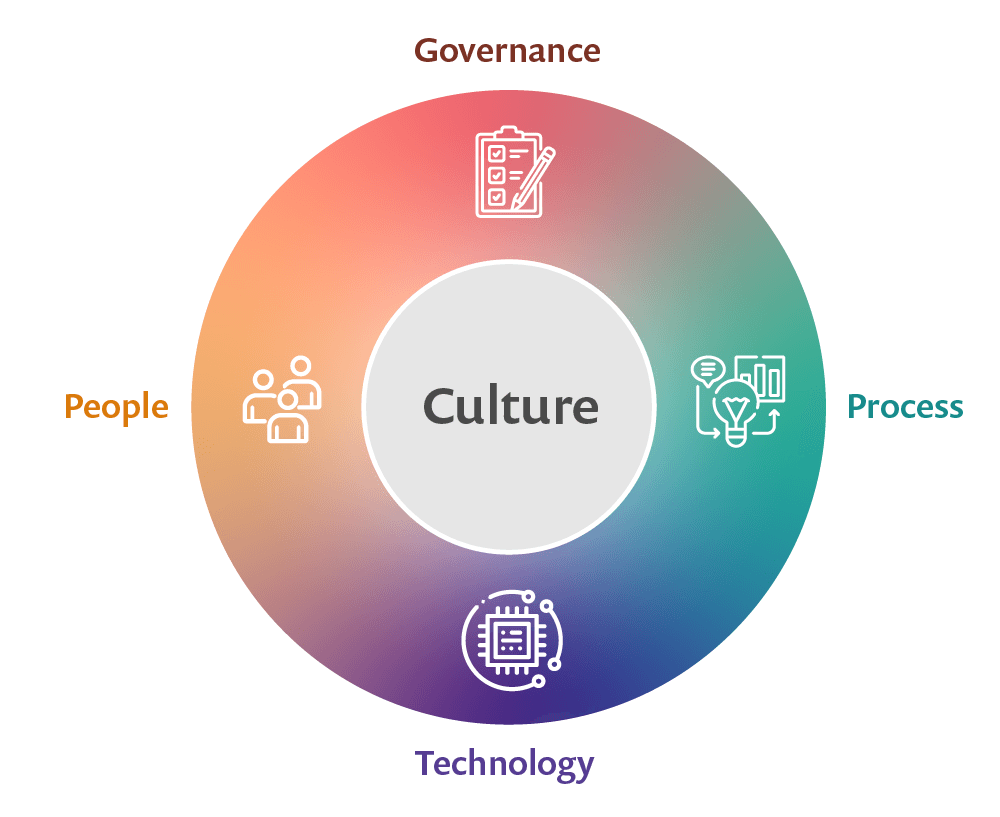
Online media and marketing are filled with terms like DevSecOps methodology, DevSecOps model, or DevSecOps techniques. However, in order to be successful, organizations must understand that DevSecOps is first and foremost a culture. DevSecOps culture focuses on uniting the normally siloed roles of Development, Security, and Operations into a collaborative shared-responsibility paradigm. It seeks to break down barriers of finger pointing and deflection. Instead, it aims to build empathy and common goals among various disciplines within the organization.

Article

DevSecOps Overview

DevSecOps refers to the integration of security practices into a DevOps software delivery model. Its foundation is a culture where development and operations are enabled through process and tooling to take part in a shared responsibility for delivering secure software.

Article

Cloud Compliance Explained

What is cloud compliance, and how do you bring your cloud environment into compliance with different standards and controls whilst following best practices?

Article

Cloud Compliance Tools Guide

When choosing a cloud compliance tool, consider capabilities such as policy as code and historical reporting to help maintain and verify your compliance.

Article

Cloud Compliance Standards: Frameworks & Controls

When choosing a cloud compliance tool, consider capabilities such as policy as code and historical reporting to help maintain and verify your compliance.

Article

SOC 2 Cloud Compliance Guide

What is SOC 2 and why is it important for your organization? Follow our steps to bring your cloud environments into SOC 2 compliance.

Corona blog feature
Article

Understanding SOC 2 Audits: Checklist & Process

A SOC 2 audit can give your organization a competitive advantage. But what does the audit entail? Here’s A 4-step SOC 2 Audit checklist.

Article

Software Supply Chain Security

Learn more about software supply chain security, why it’s important to organizations, and how you can secure your supply chains with Snyk.

Article

Software Supply Chain Attacks

Attackers leverage third-party resources to perform software supply chain attacks. Learn how what these attacks look like and how to prevent them.

Article

The Importance of Deputy CISO's in Security Teams

Having a backup to the CISO is an important part of a cybersecurity program. It ensures that critical functions are still being performed if the CISO is unavailable.

Article

What is Ethical Hacking?

As technology continues to play an increasingly important role in our lives, ethical hacking is becoming an essential part of any organization's cybersecurity strategy, learn what it is and how to use it to your advantage.

Article

Ethical Hacking: Skills & Training

Both technical and non-technical skills are required for ethical hacking, find out what you need to learn, and where to learn it!

Article

Ethical Hacking: Certifications

Ethical hacking certifications are a key part of learning. Find out which certifications are popular and how to prepare for ethical hacking exams.

Article

Ethical Hacking: Reporting Your Findings

Ethical hackers need to share the information they discover through detailed reports. Learn about the different report types, and how to construct them.

Article

Ethical Hacking: Vulnerability Disclosure Program (VDP) Vs Bug Bounty (BB)

How does a bug bounty (BB) program compare to other vulnerability disclosure programs (VDP)? Learn how enterprises are using VDPs to help secure their applications.

Article

Enterprise security: How to stay secure at enterprise scale

Enterprise security is the use of technologies, practices, and processes to protect digital assets, systems, and data from threats and vulnerabilities.

Article

Enterprise vulnerability management: Processes & tools

Enterprise vulnerability management is the systematic process of identifying, assessing, prioritizing, and mitigating vulnerabilities in an organization's digital infrastructure, applications, and systems.

Article

Enterprise Application Security

Learn how to protect complex applications from common threats with our guide to enterprise application security. Discover best practices, tools, and successful examples.

Article

What is enterprise-grade security?

By embracing an enterprise-grade approach, businesses can ensure end-to-end security throughout their software development journey

Article

Enterprise security tools: types and key considerations

Security tooling is a financial investment and an investment of time and resources to deploy, maintain, and manage. Therefore, organizations must carefully evaluate and prioritize their security needs to choose the best tools for their unique needs.