Top 8 Claude Skills for Entrepreneurs, Startup Founders, and Solopreneurs
Written by

0 mins read
If you spend any time on r/Entrepreneur, r/SaaS, or Indie Hackers, you have probably noticed the conversation around AI tooling shift from "will this replace me?" to "how do I use this to ship faster?" The skepticism has not disappeared entirely, but it has been overtaken by a practical energy. Solo founders are building MVPs in days instead of months. Non-technical entrepreneurs are launching SaaS products without hiring a CTO. The numbers back this up: 58% of small businesses started using AI tools regularly in 2025, up from 40% the year before, and 20% of solopreneurs now earn between $100,000 and $300,000 annually without any employees.
Claude Code, Anthropic's agentic coding tool, hit $1 billion in annualized revenue within six months of launch. Its development lead, Boris Cherny, publicly stated that for 30 consecutive days, 100% of his coding tasks were performed by the AI. On r/startups and r/SideProject, founders share workflows where Claude handles everything from prototyping a landing page to analyzing competitor pricing. On Indie Hackers, the conversation has moved past "should I use AI?" to "which AI workflow is fastest for getting to my first paying customer?"
The core insight driving this adoption: AI does not replace the founder's judgment or creative vision. It handles the parts of building a business that were always tedious but necessary (writing boilerplate copy, building financial models, structuring launch sequences, setting up analytics) so the human can focus on the parts that actually require taste, relationships, and domain expertise.
Snyk's Brian Clark walks through building a complete app with Claude Code, the same agentic coding workflow that entrepreneurs are using to prototype and ship products faster.
Claude Skills are one of the most interesting entry points into this workflow. If you have not encountered them yet, they are worth understanding because they occupy a unique position in the Claude ecosystem.
What are Claude Skills (and what they are not)
The Claude ecosystem has several extension mechanisms, and they are easy to confuse. Here is a quick disambiguation:
CLAUDE.md files are persistent project memory. They load into every session and tell Claude things like "this project uses Next.js" or "our brand voice is casual and direct." They are always-on context, not on-demand capabilities.
Custom Slash Commands (
.claude/commands/*.md) were simple prompt templates triggered by/command-name. They have been effectively merged into Skills. Skills that define anargument-hintin their frontmatter can be invoked as slash commands, while others activate contextually based on your task.MCP Servers are running processes that expose tools and data sources via the Model Context Protocol. They let Claude call APIs, query databases, or interact with external services. They require a server process and code.
Claude Connectors connect Claude to external services like Slack, Figma, or Asana via remote MCP servers with OAuth.
Claude Apps refers to the platforms where Claude runs (Claude.ai, Claude Code, mobile, desktop), not extensions to Claude.
Plugins are bundles that package skills, agents, hooks, and MCP servers together for distribution.
Claude Skills are directories containing a SKILL.md file (with YAML frontmatter and markdown instructions) plus optional supporting files like scripts, templates, and reference docs. What makes them unique:
They are directories, not single files. A skill can bundle shell scripts, Python helpers, reference documentation, and asset files alongside its instructions.
Progressive disclosure. At startup, Claude loads only each skill's
nameanddescriptionfrom the YAML frontmatter (roughly 100 tokens per skill), similar to how MCP tool descriptions are injected into context. Claude matches your task against those descriptions to decide which skill to activate. When it finds a match, it loads the fullSKILL.mdinstructions. Supporting files (references, scripts, assets) load only when explicitly needed during execution. This three-tier approach keeps your context window lean even with dozens of skills installed. It also means a skill'sdescriptionfield is critical: vague descriptions activate unreliably, while precise descriptions with explicit trigger phrases (like "Use this skill when the user asks to write marketing copy") activate consistently.They can execute code. Skills can include scripts in
scripts/that Claude runs during execution, and they can use the !command`` syntax to inject dynamic output into the prompt context.They follow an open standard. The Agent Skills specification has been adopted by Claude Code, OpenAI Codex, Cursor, Gemini CLI, and others, making skills portable.
They can register as slash commands. Skills that include an
argument-hintfield in their YAML frontmatter can be invoked directly as/skill-name. Skills without an argument hint activate contextually instead, meaning Claude picks them up automatically when your task matches their description.
The official specification and Anthropic's skills documentation cover the full format. The Anthropic engineering blog post on Agent Skills is also worth reading for the design rationale.
Installing a Claude Skill
Installing a skill takes about 30 seconds.
Project level (shared with your team via version control):
User level (personal, available across all projects):
Via plugins (for skill collections):
Skills at the project level are shared with teammates through source control. Skills at the user level are private to you. When names conflict, enterprise skills take precedence over personal skills, which take precedence over project skills.
One important caveat: the Agent Skills ecosystem is new and growing fast, which means supply chain security matters. Snyk's ToxicSkills research found prompt injection in 36% of skills tested, 1,467 malicious payloads across the ecosystem, and 534 skills (13.4% of those audited) with at least one critical security issue. Always review a skill's SKILL.md and any bundled scripts before installing. Treat skills the way you would treat any third-party code you run in your environment.
Building a Claude Skill? If you are creating or maintaining an open source Claude Skill or MCP server, the Snyk Secure Developer Program provides free enterprise-level security scanning for open source projects. Snyk secures 585,000+ open source projects and offers full enterprise access, Discord community support, and integration assistance to qualifying maintainers. Apply here if you have an existing project, or here if you are starting a new one.
Now, onto the list. These eight skills (and skill collections) cover the spectrum from marketing and copywriting to product strategy, financial modeling, launch planning, and lead generation, giving founders AI-powered workflows for the tasks that normally eat up entire days.
# | Skill | Stars | Focus | Source |
1 | Marketing Skills (Corey Haines) | 6,852 | Copywriting, CRO, SEO, launch strategy, pricing (25 skills) | |
2 | Wondelai Product & Strategy Skills | 88 | Jobs to Be Done, StoryBrand, Hooked UX, Scorecard Marketing (11 skills) | |
3 | Anthropic PPTX Skill | 65,847 | Pitch deck and presentation creation | |
4 | SaaS Financial Projections | 1 | Revenue modeling, exit valuations, unit economics | |
5 | Claude Skills Library (nginity) | 1,668 | Product management, marketing, C-level advisory (48 skills) | |
6 | Landing Page Mastery | 5 | High-conversion landing page creation and auditing | |
7 | Anthropic Skill Creator | 65,847 | Build your own custom skills for any workflow | |
8 | Snyk Fix | 3 | Security scanning and automated vulnerability remediation |
1. Marketing skills by Corey Haines (copywriting, CRO, SEO, launch strategy)
Source: coreyhaines31/marketingskills. Stars: 6,852. License: MIT. Last updated: February 2026. Verified SKILL.md: Yes (25 SKILL.md files across skill directories).
If you install one skill collection from this list, make it this one. Corey Haines (the founder behind SwipeFiles and former Head of Growth at Baremetrics) built this as an open source marketing department that lives inside your terminal. With 25 individual skills covering the full marketing lifecycle, it is the most comprehensive marketing-focused skill collection available.
What is inside
The 25 skills break down into clear categories:
Category | Skills |
|---|---|
Copywriting |
|
Conversion Optimization |
|
SEO and Content |
|
Growth Strategy |
|
Pricing and Competitors |
|
Email and Ads |
|
Analytics and Testing |
|
Foundations |
|
The copywriting skill alone is a masterclass in conversion writing. It enforces principles like "clarity over cleverness" and "specificity over vagueness," includes page-specific guidance for homepages, landing pages, pricing pages, and feature pages, and provides CTA formulas that go well beyond "Sign Up" or "Learn More." It even checks for a product-marketing-context.md file first, so it can use your existing brand context without asking redundant questions.
The launch-strategy skill is equally thorough. It implements the ORB Framework (Owned, Rented, Borrowed channels), walks through a five-phase launch from internal testing to full public launch, and includes a detailed Product Hunt strategy with case studies from SavvyCal and Reform. It covers post-launch product marketing, ongoing announcement prioritization, and provides a complete pre-launch/launch-day/post-launch checklist.
Why entrepreneurs should care
Most founders approach marketing one task at a time: "I need a headline," "I need to set up Google Analytics," "I need a launch plan." These skills connect those tasks into coherent workflows. The marketing-psychology skill teaches frameworks (loss aversion, social proof, anchoring) that inform every other skill. The product-marketing-context skill creates a shared knowledge base that every other marketing skill references. You are not just getting 25 prompts. You are getting 25 interconnected systems.
Installation
Usage
Skills activate contextually. When you describe a marketing task, Claude selects the right one:
2. Wondelai product and strategy skills (jobs to be done, storybrand, scorecard marketing, hooked UX)
Source: wondelai/skills. Stars: 88. License: MIT. Last updated: February 2026. Verified SKILL.md: Yes (11 SKILL.md files, each with accompanying reference documents).
Where the Marketing Skills collection (#1) focuses on execution (write copy, run SEO audits, set up A/B tests), this collection focuses on strategy. Each skill implements a well-known business or product framework as an interactive Claude workflow, backed by reference documents that capture the full methodology.
What is inside
Skill | Framework | Key use cases |
| Clayton Christensen's JTBD | Customer discovery, product positioning, and competitive analysis. |
| Donald Miller's StoryBrand | Brand messaging, website copy, one-liners, elevator pitches. |
| Daniel Priestley's Scorecard | Lead generation funnels, quiz assessments, and qualification. |
| Nir Eyal's Hook Model | User retention, habit loops, engagement mechanics. |
| Conversion Rate Optimization | Systematic site optimization. |
| Negotiation frameworks | Sales conversations, partnerships, vendor deals. |
Plus five design-focused skills: refactoring-ui, ios-hig-design, ux-heuristics, web-typography, and top-design.
Why entrepreneurs should care
The jobs-to-be-done skill is standout. At 7,600 characters, it implements Christensen's full JTBD methodology: the three dimensions of every job (functional, emotional, social), the forces of progress model (push, pull, habit, anxiety), Big Hire vs. Little Hire analysis, and a structured interview process with specific questions for each phase. It includes a job statement template ("When [circumstances], I want to [progress], so I can [outcome]") and teaches Claude to identify non-obvious competition through the jobs lens.
The storybrand-messaging skill is equally comprehensive at nearly 9,000 characters. It walks through the full SB7 Framework (Character, Problem, Guide, Plan, Call to Action, Success, Failure), includes a one-liner formula ("We help [character] who struggle with [problem] to [solution] so they can [result]"), provides a website wireframe template, and has diagnostic questions to audit any marketing asset. Every skill includes a 0-10 scoring system, so Claude rates your work against the framework's principles and tells you specifically what needs improvement.
The scorecard-marketing skill implements Daniel Priestley's quiz/assessment funnel system, which claims 30-50% conversion rates compared to 3-10% for traditional PDF lead magnets. It covers the entire pipeline: landing page design, questionnaire structure, dynamic results pages, and follow-up sales sequences.
Each skill includes reference documents in a references/ directory with additional depth (case studies, templates, implementation details), so Claude can load supplementary material when needed without bloating the initial context.
Installation
Usage
3. Anthropic PPTX skill (pitch deck and presentation creation)
Source: anthropics/skills (path: skills/pptx/). Stars: 65,847 (repository total). License: Proprietary (see LICENSE.txt). Last updated: February 2026. Verified SKILL.md: Yes.
This is Anthropic's official skill for creating, editing, and reading PowerPoint presentations. For entrepreneurs, this means pitch decks, investor updates, sales presentations, and board meeting slides, all generated from your terminal without opening PowerPoint or Google Slides.
What it does
The skill handles three workflows:
Creating from scratch using pptxgenjs (a Node.js library), guided by an opinionated design system.
Editing existing presentations by unpacking, manipulating, and repacking .pptx files.
Reading and analyzing presentations using text extraction and visual thumbnailing.
What sets this apart from simply asking Claude to "make a pitch deck" is the design intelligence baked in. The SKILL.md includes a comprehensive design guide covering:
Color palettes: Ten curated themes (Midnight Executive, Coral Energy, Warm Terracotta, etc.) with specific hex values, chosen to avoid the generic blue-and-white "AI-generated slide" look.
Typography: Font pairing recommendations with size guidelines (36-44pt titles, 14-16pt body).
Layout patterns: Two-column, icon grids, half-bleed images, large stat callouts, comparison columns.
Anti-patterns: Explicit rules like "never use accent lines under titles (hallmark of AI-generated slides)" and "don't repeat the same layout across slides."
The skill includes a mandatory QA process: after generating slides, it converts them to images and runs a visual inspection for overlapping elements, text overflow, low contrast, and leftover placeholder content. It even recommends using subagents for the QA step ("You've been staring at the code and will see what you expect, not what's there").
Why entrepreneurs should care
Pitch decks matter. Whether you are raising a seed round or pitching a potential customer, a polished presentation can make the difference. This skill gives you a full design system and production pipeline without design tools or design skills.
Installation
Prerequisites: pip install "markitdown[pptx]" Pillow, npm install -g pptxgenjs, LibreOffice for PDF conversion.
Usage
4. SaaS financial projections (revenue modeling, exit valuations, unit economics)
Source: founderjourney/claude-skills (path: saas-financial-projections/). Stars: 1. License: MIT. Last updated: January 2026. Verified SKILL.md: Yes (with five reference documents).
This skill turns Claude into a senior SaaS CFO. At 12,000 characters of instructions plus five reference documents covering benchmarks, valuation multiples, exit strategies, projection templates, and cohort analysis, it is arguably the most data-dense skill on this list.
What it covers
The skill implements a four-step financial modeling framework:
Step 1: Current State Baseline calculates your core SaaS metrics: MRR, ARR, monthly/annual growth rate, ARPU, CAC, LTV, LTV:CAC ratio, CAC payback months, gross/net revenue retention, burn multiple, magic number, and Rule of 40 score.
Step 2: Revenue Projection builds a bottom-up revenue model (new MRR + expansion MRR - churned MRR) and, optionally, a more accurate cohort-based projection in which each customer cohort degrades independently.
Step 3: Three-Scenario Framework generates conservative, base, and optimistic projections using multipliers (conservative: 0.7x growth, 1.3x churn; optimistic: 1.4x growth, 0.7x churn).
Step 4: Exit Valuation uses three methods: revenue multiple, EBITDA multiple, and discounted cash flow. It adjusts multiples based on growth rate, net revenue retention, gross margin, and Rule of 40 score.
The embedded benchmarks are genuinely useful. For example, the 2025-2026 SaaS valuation multiples:
Category | Multiple range |
Public SaaS Median | 6-7x Revenue |
Private Bootstrapped | 4-5x ARR (4.8x median) |
Private VC-Backed | 5-6x ARR (5.3x median) |
High Growth (>40% YoY) | 7-10x ARR |
NRR >120% | 11-12x ARR |
Why entrepreneurs should care
Financial modeling is one of those tasks that most founders know they should do but avoid because it feels complicated or because they do not have a finance background. This skill provides the structure, formulas, benchmarks, and output templates so you can go from "I have $10k MRR" to "here is a 5-year projection with exit scenarios" in a single session. The output templates are formatted for investor conversations, not just internal planning.
The skill does have low adoption (1 star), which reflects its newness rather than its quality. The SKILL.md itself is well-structured with real 2025-2026 benchmark data.
Installation
Usage
Related Snyk Resources:
5. Claude skills library by nginity (product management, marketing, C-level advisory)
Source: alirezarezvani/claude-skills. Stars: 1,668. License: MIT. Last updated: February 2026. Verified SKILL.md: Yes (48 SKILL.md files across 7 domain bundles).
This is the most comprehensive multi-domain skill library available, covering 48 skills organized into seven bundles. For entrepreneurs, the product, marketing, business-growth, and C-level-advisor bundles are the standout categories.
Domain bundles
Bundle | Skills | Focus |
Marketing Skills (5) | Content creator, demand generation, product marketing strategy, app store optimization, and social media analyzer. | Full marketing stack. |
Product Skills (5) | Product manager toolkit, design system, API design, mobile dev, accessibility. | Product development. |
C-Level Advisory (2) | CEO advisory, CTO advisory. | Executive decision-making. |
Business Growth (3) | Customer success, revenue operations, sales engineer. | Revenue and retention. |
Project Management (6) | Agile, Scrum master, Kanban, release management, risk assessment, and sprint planning. | Delivery and execution. |
Engineering (18) | Full-stack, DevOps, testing, architecture, security, etc. | Technical implementation. |
Regulatory/QM (12) | Compliance, quality management, and regulatory affairs. | Regulated industries. |
The product manager toolkit
The product-manager-toolkit skill deserves special attention. At nearly 14,000 characters, it includes two Python scripts that Claude runs during execution:
RICE Prioritizer (
scripts/rice_prioritizer.py): Takes a CSV of feature ideas, calculates RICE scores (Reach, Impact, Confidence, Effort), generates portfolio analysis (quick wins vs. big bets), and produces a quarterly roadmap based on your team's capacity. It outputs in text, JSON, or CSV formats.Customer Interview Analyzer (
scripts/customer_interview_analyzer.py): Processes interview transcripts and extracts pain points with severity, feature requests with priority, Jobs to Be Done patterns, sentiment analysis, key quotes, and competitor mentions.
The skill also includes core workflows for feature prioritization, customer discovery, and PRD development, with templates for Standard PRDs, One-Page PRDs, Feature Briefs, and Agile Epics.
Why entrepreneurs should care
This is the closest thing to hiring a junior product manager, marketing coordinator, and business analyst all at once. The bundles are designed to work together. The product manager toolkit identifies what to build. The marketing skills help you position and promote it. The business growth skills handle post-launch customer success and revenue operations. The C-level advisory skills provide strategic guidance for the decisions that keep you up at night.
The library is cross-agent compatible, with installation support for Claude Code, OpenAI Codex, Cursor, VS Code, Copilot, Goose, Amp, and more.
Installation
Usage
6. Landing page mastery
Source: alexdcd/Mafia-Claude-Skills (path: skills/landing-page-mastery/). Stars: 5. License: Apache-2.0. Last updated: January 2026. Verified SKILL.md: Yes (with six reference documents).
This skill is a specialized expert system for creating and auditing high-conversion landing pages. While the Marketing Skills collection (#1) includes a page-cro skill for optimizing existing pages, this skill goes deeper into the creation process with a structured workflow, copywriting frameworks, and 2026 conversion benchmarks.
Note: The skill's output is in Spanish by default (it was created for Spanish-speaking founders). However, the frameworks, structures, and benchmarks are universal, and you can instruct Claude to output in English.
What it covers
Two workflows:
Creation Flow:
Discovery phase gathers product type, price point, target audience, core problem, differentiator, brand tone, and visual style.
Structure selection matches your product type to a recommended page layout (SaaS: 12-14 sections, Course: 10-12 sections, Lead Magnet: 6-8 sections, Newsletter: 4-5 sections).
Copy first approach uses PAS (Problem-Agitation-Solution), AIDA, and Specific Outcome formulas.
Design and build with mobile-first responsive design, color psychology, and micro-interactions.
Conversion optimization adds sticky CTAs, trust indicators near buttons, objection handling, and form field reduction.
Audit flow:
Collects current URL, conversion rate, traffic source, and conversion goal
Runs a systematic 100-point checklist across 7 categories (Hero section, value prop, social proof, CTA optimization, copy quality, design/UX, technical performance)
Scores the page out of 100
Prioritizes issues by estimated conversion impact (critical: >10% drop, high: 5-10%, medium: <5%)
The skill includes six reference documents: page structures by product type, copywriting frameworks, design guidelines, an audit checklist, conversion element patterns, and a catalog of all available sections.
2026 Benchmarks included:
Metric | Average | Good | Excellent |
General Conversion Rate | 6.6% | 10% | 15%+ |
SaaS Conversion Rate | 3.8% | 7% | 10%+ |
Page Load Time | 3s | 2s | <1s |
Bounce Rate | 50% | 35% | <25% |
Why entrepreneurs should care
Your landing page is often the first thing a potential customer sees. Getting it right is the difference between a 3% conversion rate and a 10% conversion rate. This skill codifies the patterns that conversion rate optimization specialists charge thousands of dollars to implement.
Installation
Usage
7. Anthropic skill creator (build your own custom skills)
Source: anthropics/skills (path: skills/skill-creator/). Stars: 65,847 (repository total). License: Proprietary (see LICENSE.txt). Last updated: February 2026. Verified SKILL.md: Yes.
This is the meta-skill, Anthropic's official skill for creating new skills. If none of the other skills on this list perfectly match your workflow, this one helps you build your own.
Why it belongs on this list
Entrepreneurs have unique workflows. Maybe you need a skill that combines your specific brand voice guidelines with a competitive analysis framework. Maybe you want a skill that automates your weekly investor update email using data from your analytics dashboard. Maybe you need a skill tailored to your industry's compliance requirements.
The skill-creator skill teaches Claude the Agent Skills specification and walks through creating a properly structured skill directory: YAML frontmatter with the right fields (name, description, argument-hint, allowed-tools), markdown instructions that follow progressive disclosure best practices, scripts that work with the !command`` syntax, and reference documents that load on demand.
Because the Agent Skills spec is an open standard adopted by Claude Code, OpenAI Codex, Cursor, Gemini CLI, and others, skills you create with this tool are portable across agents.
Installation
Usage
Related Snyk resources:
8. Snyk Fix (security scanning and automated vulnerability remediation)
Source: snyk/studio-recipes (path: command_directives/synchronous_remediation/claude_code/skills/snyk-fix) Stars: 3. License: Apache-2.0. Last updated: February 2026. Verified SKILL.md: Yes.
You might wonder why a security skill appears on an entrepreneur's list. Here is why: if you are building a product, especially a SaaS product, security vulnerabilities in your code or dependencies are business risks. A data breach or exploited vulnerability can kill a startup faster than bad marketing can. And if you are a solo founder or small team using AI to write code at speed, the risk is real. Research shows that nearly half of all AI-generated code contains security issues.
What does it take to write secure code with AI? Snyk's Brian Clark covers the practices that help developers catch vulnerabilities before they reach production.
Snyk's official Claude Skill automates the full vulnerability remediation lifecycle: scan your code, identify the issue, fix it, validate the fix, and optionally create a pull request. The entire cycle happens inside your terminal without context switching.
What it does
The skill handles both code vulnerabilities (SAST) and dependency vulnerabilities (SCA) through the Snyk MCP integration. It auto-detects which scan type to run based on your request:
Request | Behavior |
"fix security issues" | Auto-detect scan type, fix highest priority issue. |
"fix code vulnerabilities" | SAST scan only. |
"fix dependency vulnerabilities" | SCA scan only. |
"fix CVE-2021-44228" | Find and fix a specific CVE. |
"fix XSS vulnerabilities" | Fix all XSS instances in the highest priority file. |
For code vulnerabilities, the skill groups all instances of the same vulnerability type in the same file and fixes them together. For dependency vulnerabilities, it finds the minimum version that resolves the issue and checks for breaking changes. The validation phase re-runs the Snyk scan to confirm the vulnerability is resolved and runs your test suite to check for regressions.
Why entrepreneurs should care
Security is table stakes for any SaaS product. Customers ask about it during sales conversations. Enterprise prospects require SOC 2 compliance. And a vulnerability in a dependency you did not even choose (because it was pulled in transitively) can expose your entire user base. This skill lets you address security without becoming a security expert. Fix the issues Snyk finds, validate the fixes, and move on.
Prerequisites
This skill requires the Snyk MCP server to be configured in your Claude Code environment.
Installation
Usage
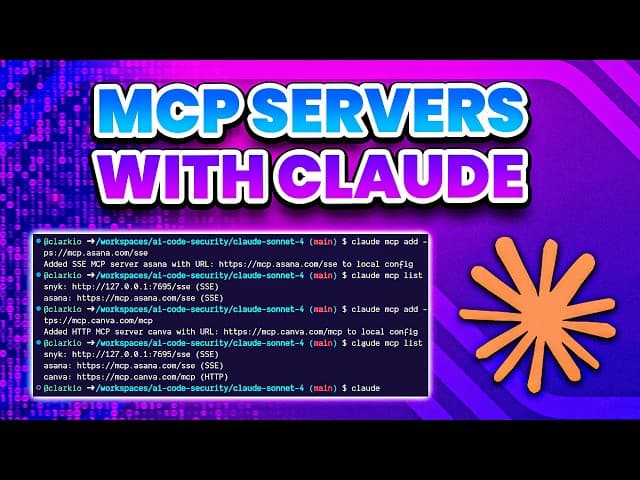
The snyk-fix skill requires the Snyk MCP server. This tutorial shows how to set up MCP servers in Claude Code CLI, including the Snyk integration that powers the scan and fix tools.
Related Snyk resources:
A note on security when installing skills
The skills on this list are from identifiable authors with clear licensing. But the broader Agent Skills ecosystem is still maturing, and Snyk's ToxicSkills study found that 13.4% of skills tested contained critical security flaws, including credential theft, backdoor installation, and data exfiltration attempts. The SKILL.md to Shell Access research demonstrated how three lines of markdown in a skill file can grant an attacker shell access to your machine. A follow-up study found 280+ skills leaking API keys and PII.
Before installing any skill:
Read the
SKILL.mdand any bundled scripts. Skills are markdown and shell scripts, not compiled binaries. You can read every line.Check the source. Skills from established organizations (Anthropic, Snyk) and known creators (Corey Haines, Trail of Bits) carry lower risk than anonymous accounts.
Review permissions. The
allowed-toolsfrontmatter field shows what tools a skill can use. A skill that needsBashaccess warrants more scrutiny than one that only uses Read and Write.Use Snyk to scan. If you are already using Snyk Code or the Snyk MCP integration, you can scan skill scripts the same way you scan any code.
The general principle: trust, then verify.
Wrapping up
Claude Skills sit in a sweet spot between "just a prompt" and "full integration." They give entrepreneurs structured, repeatable workflows without requiring the overhead of running MCP servers or building custom tooling. The Marketing Skills collection alone covers more of the growth marketing playbook than most startups have documented anywhere, and the Wondelai strategy skills bring frameworks like Jobs to Be Done and StoryBrand into interactive sessions where Claude scores your work and tells you exactly what needs to improve.
The entrepreneurial community's embrace of AI tooling is not about replacing the founder's vision or hustle. It is about removing friction from the tasks that founders already know how to think about but find time-consuming to execute: writing landing page copy, building financial models, structuring launch sequences, prioritizing features, and keeping code secure. Skills formalize that delegation.
If you are already using Claude Code for your business, installing a few of these skills is a 5-minute investment that pays off the first time Claude writes a pitch deck that actually looks designed, models three exit scenarios from your current MRR, or fixes a dependency vulnerability before it becomes a customer trust issue.
If you are looking for MCP servers instead of Claude Skills, see our 10 MCP Servers for Entrepreneurs Using AI.
EBOOK
Securing the MCP Servers Ecosystem
Explore emerging attack paths and unpack real-world incidents to show how to defend against them with practical, flow-aware strategies.