
Report
Snyk named a Leader in The Forrester Wave™: Agentic Development Security Tools (Gated)
Learn why Snyk was named a Leader in The Forrester Wave™: Agentic Development Security Tools, Q4 2026.
Cheat Sheet
Cheat Sheet
Video
Report
Showing 577 - 600 of 756 resources

Cultivating a DevSecOps Culture: Real-world implementations
Throughout the continued journey of implementing and maturing a DevSecOps model, sharing successes and lessons learned can help everyone improve. The following are examples from organizations who have adopted DevSecOps and have worked to achieve higher levels of maturity.
The Essential Guide to AI Bills of Materials (AIBOMs)
This guide is your one-stop shop on AI Bill of Materials (AIBOMs). Learn how to build an inventory of your AI model.
Security Champions Overview
Security champions are developers with an interest in security and a home in development. They are the interface between two teams that have traditionally been siloed. Let’s take a look at some of the benefits any organization can gain from these programs.
DevSecOps Technology
Technologies are what enable your people to properly execute DevSecOps processes. When most people think of DevSecOps and CI/CD, tooling is often top of mind. The ability to integrate and automate various development, security, and operations processes lies at the heart of a successful DevSecOps implementation. The following is a collection of technologies organizations must consider as they seek to implement a successful DevSecOps methodology within the enterprise.
The DevSecOps Process
Learn more about DevSecOps processes and various practices that need to be integrated into the DevSecOps environment and strategic points along the pipeline.
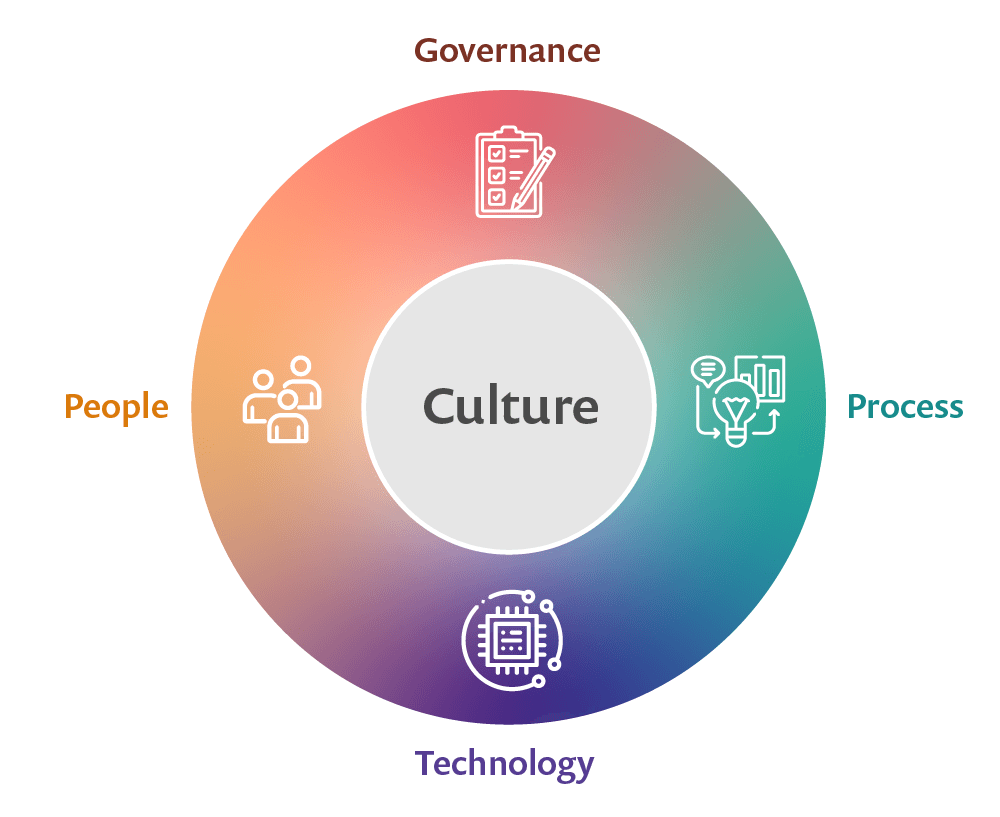
DevSecOps Culture
Online media and marketing are filled with terms like DevSecOps methodology, DevSecOps model, or DevSecOps techniques. However, in order to be successful, organizations must understand that DevSecOps is first and foremost a culture. DevSecOps culture focuses on uniting the normally siloed roles of Development, Security, and Operations into a collaborative shared-responsibility paradigm. It seeks to break down barriers of finger pointing and deflection. Instead, it aims to build empathy and common goals among various disciplines within the organization.
DevSecOps Overview
DevSecOps refers to the integration of security practices into a DevOps software delivery model. Its foundation is a culture where development and operations are enabled through process and tooling to take part in a shared responsibility for delivering secure software.
Cloud Compliance Explained
What is cloud compliance, and how do you bring your cloud environment into compliance with different standards and controls whilst following best practices?
Cloud Compliance Tools Guide
When choosing a cloud compliance tool, consider capabilities such as policy as code and historical reporting to help maintain and verify your compliance.
Cloud Compliance Standards: Frameworks & Controls
When choosing a cloud compliance tool, consider capabilities such as policy as code and historical reporting to help maintain and verify your compliance.
SOC 2 Cloud Compliance Guide
What is SOC 2 and why is it important for your organization? Follow our steps to bring your cloud environments into SOC 2 compliance.

Understanding SOC 2 Audits: Checklist & Process
A SOC 2 audit can give your organization a competitive advantage. But what does the audit entail? Here’s A 4-step SOC 2 Audit checklist.
Software Supply Chain Security
Learn more about software supply chain security, why it’s important to organizations, and how you can secure your supply chains with Snyk.
Software Supply Chain Attacks
Attackers leverage third-party resources to perform software supply chain attacks. Learn how what these attacks look like and how to prevent them.
The Importance of Deputy CISO's in Security Teams
Having a backup to the CISO is an important part of a cybersecurity program. It ensures that critical functions are still being performed if the CISO is unavailable.
What is Ethical Hacking?
As technology continues to play an increasingly important role in our lives, ethical hacking is becoming an essential part of any organization's cybersecurity strategy, learn what it is and how to use it to your advantage.
Ethical Hacking: Skills & Training
Both technical and non-technical skills are required for ethical hacking, find out what you need to learn, and where to learn it!
Ethical Hacking: Certifications
Ethical hacking certifications are a key part of learning. Find out which certifications are popular and how to prepare for ethical hacking exams.
Ethical Hacking: Reporting Your Findings
Ethical hackers need to share the information they discover through detailed reports. Learn about the different report types, and how to construct them.
Ethical Hacking: Vulnerability Disclosure Program (VDP) Vs Bug Bounty (BB)
How does a bug bounty (BB) program compare to other vulnerability disclosure programs (VDP)? Learn how enterprises are using VDPs to help secure their applications.
Enterprise security: How to stay secure at enterprise scale
Enterprise security is the use of technologies, practices, and processes to protect digital assets, systems, and data from threats and vulnerabilities.
Enterprise vulnerability management: Processes & tools
Enterprise vulnerability management is the systematic process of identifying, assessing, prioritizing, and mitigating vulnerabilities in an organization's digital infrastructure, applications, and systems.
Enterprise Application Security
Learn how to protect complex applications from common threats with our guide to enterprise application security. Discover best practices, tools, and successful examples.
What is enterprise-grade security?
By embracing an enterprise-grade approach, businesses can ensure end-to-end security throughout their software development journey