Top 9 Claude Skills for Cybersecurity, Hacking, and Vulnerability Scanning

If you hang around r/netsec or the Hack The Box Discord long enough, you'll notice a shift in how security professionals talk about AI tooling. The skepticism that dominated threads two years ago has given way to something more pragmatic. SOC analysts are using LLMs to generate Sigma rules from threat intel reports. Pen testers are feeding recon output into Claude and getting back structured attack plans. Malware analysts are generating YARA signatures from behavioral analysis in minutes instead of hours.
The numbers reflect this shift. According to Darktrace's State of AI Cybersecurity report, 96% of cybersecurity professionals now agree AI can significantly improve the speed and efficiency of their work. On subreddits like r/blueteamsec and r/redteamsec, posts about AI-assisted detection engineering and automated CTF solving regularly surface alongside discussions of traditional tools. Even the traditionally skeptical r/ReverseEngineering crowd has warmed up, with researchers sharing workflows where Claude annotates disassembly output and correlates behaviors with MITRE ATT\&CK techniques.
The core insight driving this adoption: AI does not replace the analyst's judgment or the pen tester's creativity. It handles the parts of the job that were always tedious but necessary (writing reports, converting rule formats, enumerating attack surfaces, checking code against known vulnerability patterns) so the human can focus on the parts that actually require expertise.
Snyk's Brian Clark breaks down the three most common security risks introduced by AI code generation, and what developers can do about them.
Claude Skills are one of the most interesting entry points into this workflow. If you have not encountered them yet, they are worth understanding because they occupy a unique position in the Claude ecosystem.
What are Claude Skills (and what are they not)?
The Claude ecosystem has several extension mechanisms, and they are easy to confuse. Here is a quick disambiguation:
CLAUDE.md files are persistent project memory. They load into every session and tell Claude things like "this project uses pytest" or "always use 2-space indentation." They are always-on context, not on-demand capabilities.
Custom Slash Commands (
.claude/commands/*.md) were simple prompt templates triggered by/command-name. They have been effectively merged into Skills. Skills that define anargument-hintin their frontmatter can be invoked as slash commands, while others activate contextually based on your task.MCP Servers are running processes that expose tools and data sources via the Model Context Protocol. They let Claude call APIs, query databases, or interact with external services. They require a server process and code.
Claude Connectors connect Claude to external services like Slack, Figma, or Asana via remote MCP servers with OAuth.
Claude Apps refers to the platforms where Claude runs (Claude.ai, Claude Code, mobile, desktop), not extensions to Claude.
Plugins are bundles that package skills, agents, hooks, and MCP servers together for distribution.
Claude Skills are directories containing a SKILL.md file (with YAML frontmatter and markdown instructions) plus optional supporting files like scripts, templates, and reference docs. What makes them unique:
They are directories, not single files. A skill can bundle shell scripts, Python helpers, reference documentation, and asset files alongside its instructions.
Progressive disclosure. At startup, Claude loads only each skill's
nameanddescriptionfrom the YAML frontmatter (roughly 100 tokens per skill), similar to how MCP tool descriptions are injected into context. Claude matches your task against those descriptions to decide which skill to activate. When it finds a match, it loads the full SKILL.md instructions. Supporting files (references, scripts, assets) load only when explicitly needed during execution. This three-tier approach keeps your context window lean even with dozens of skills installed. It also means a skill'sdescriptionfield is critical: vague descriptions activate unreliably, while precise descriptions with explicit trigger phrases (like "Use this skill when the user asks to fix security vulnerabilities") activate consistently.They can execute code. Skills can include scripts in
scripts/that Claude runs during execution, and they can use the!command`` syntax to inject dynamic output into the prompt context.They follow an open standard. The Agent Skills specification has been adopted by Claude Code, OpenAI Codex, Cursor, Gemini CLI, and others, making skills portable.
They can register as slash commands. Skills that include an
argument-hintfield in their YAML frontmatter can be invoked directly as/skill-name. For example, a skill installed at.claude/skills/snyk-fix/with an argument hint becomes available as/snyk-fix. Skills without an argument hint activate contextually instead, meaning Claude picks them up automatically when your task matches their description.
The official specification and Anthropic's skills documentation cover the full format. The Anthropic engineering blog post on Agent Skills is also worth reading for the design rationale.
Installing a Claude Skill
Installing a skill takes about 30 seconds.
Project level (shared with your team via version control):
User level (personal, available across all projects):
Via plugins (for skill collections like Trail of Bits):
Skills at the project level are shared with teammates through source control. Skills at the user level are private to you. When names conflict, enterprise skills take precedence over personal skills, which take precedence over project skills.
One important caveat: the Agent Skills ecosystem is new and growing fast, which means supply chain security matters. Snyk's ToxicSkills research found prompt injection in 36% of skills tested and 1,467 malicious payloads across the ecosystem. Always review a skill's SKILL.md and any bundled scripts before installing. Treat skills the way you would treat any third-party code you run in your environment.
Now, onto the list. These nine skills (and skill collections) cover the spectrum from offensive penetration testing to defensive code auditing, automated remediation, and secure development practices.
# | Skill | Stars | Focus | Source |
|---|---|---|---|---|
1 | Trail of Bits Code Audit Skills | 2,439 | SAST with CodeQL, variant analysis | |
2 | Trail of Bits YARA Rule Authoring | 2,439 | Malware detection engineering | |
3 | Snyk Fix | 3 | Automated vulnerability remediation with Snyk | |
4 | SecSkills Pentesting Plugin | 5 | Offensive security (16 skills + 6 AI agents) | |
5 | Claude Code OWASP | 5 | OWASP Top 10:2025, ASVS 5.0, Agentic AI security | |
6 | Trail of Bits Building Secure Contracts | 2,439 | Smart contract security (11 skills) | |
7 | Snyk Learning Path | — | Tailored security learning paths from Snyk Learn | |
8 | Awesome Claude Skills Security | 19 | SecLists integration, CTF, bug bounty agents | |
9 | Claude Agentic Framework Security | 15 | Threat modeling, security review, compliance |
1. Trail of Bits code audit skills (CodeQL, SARIF, Static Analysis)
Source: trailofbits/skills (plugins: static-analysis, insecure-defaults, variant-analysis, differential-review, sharp-edges) Stars: 2,439 License: Creative Commons Attribution-ShareAlike 4.0 Last Updated: February 2026 Verified SKILL.md: Yes (28+ SKILL.md files across the repository)
If you only install one thing from this list, make it the Trail of Bits skills repository. Trail of Bits is one of the most respected security research firms in the industry, and their skills repo is the gold standard for security-focused Claude Skills.
The code audit collection spans five plugins that work together to cover the full static analysis workflow:
static-analysis is the centerpiece. It includes skills for CodeQL and SARIF output processing. The CodeQL skill walks Claude through the entire pipeline: building a CodeQL database from source, creating data extension models for project-specific APIs, selecting rulesets (security-extended, Trail of Bits community packs), and processing results. It explicitly warns against common shortcuts like accepting build-mode=none for compiled languages or treating zero findings as proof of clean code.
insecure-defaults detects fail-open security patterns where applications run insecurely when configuration is missing. It distinguishes between genuinely exploitable defaults and fail-secure patterns, which cuts down on false positives.
variant-analysis is for when you have already found one bug and want to find its cousins. It follows a five-step process: characterize the root cause, create detection patterns, sweep the codebase with CodeQL and ripgrep, validate candidates, and document findings.
differential-review focuses on security-relevant changes in git diffs, and sharp-edges identifies error-prone APIs and dangerous configurations that might not show up as traditional vulnerabilities but create footgun scenarios for developers.
What it does for you
Rather than running static analysis tools manually and staring at raw output, these skills give Claude the procedural knowledge to orchestrate the tools, interpret results, and guide you through remediation. The CodeQL skill, for example, includes decision logic for when to use security-extended vs. community query packs, how to handle build failures across three different methods, and when data extension models are worth generating.
Installation
Or manually clone and symlink:
Usage
Once installed, Claude activates these skills automatically when you ask it to scan code for vulnerabilities, run static analysis, or find similar bugs. You can also invoke them directly:
Related Snyk resources:
2. Trail of Bits YARA rule authoring
Source: trailofbits/skills (plugin: yara-authoring) Stars: 2,439 License: Creative Commons Attribution-ShareAlike 4.0 Last Updated: February 2026 Verified SKILL.md: Yes
YARA rules are the lingua franca of malware detection. Writing good ones is a craft that balances detection accuracy against performance and false positive rates. This skill is one of the most comprehensive in the entire Trail of Bits collection at over 19,000 characters of instructions.
What it covers
The skill guides Claude through YARA-X (the modern Rust rewrite of YARA) rule authoring with best practices that reflect real-world detection engineering:
String selection decision trees for choosing between text strings, hex patterns, and regex
Platform-specific detection patterns for Windows PE files, macOS Mach-O, JavaScript, Chrome extensions, and Android APKs
Atom analysis for performance optimization (ensuring YARA's internal Aho-Corasick engine has efficient search atoms)
False positive debugging workflows
CRX and DEX module support for browser extension and Android app analysis
Migration guidance from legacy YARA to YARA-X
The skill enforces quality practices like linting with yara-x check, testing against known samples, and avoiding common pitfalls like overly broad regex patterns or conditions that cause scanning performance to degrade.
Installation
Or manually:
Usage
Ask Claude to write YARA rules for a specific malware family, detection scenario, or file type. The skill activates automatically when it detects YARA-related tasks:
Who this is for: Malware analysts, threat researchers, SOC detection engineers, and anyone writing rules for YARA-based scanning pipelines.
3. Snyk Fix
Source: snyk/studio-recipes (path: command_directives/synchronous_remediation/claude_code/skills/snyk-fix) Stars: 3 License: Apache-2.0 Last Updated: February 2026 Verified SKILL.md: Yes
This is Snyk's official Claude Skill for automated vulnerability remediation. At nearly 19,000 characters, it defines a complete seven-phase workflow: parse the user's request, scan with Snyk, analyze findings, fix the vulnerability, validate the fix, summarize results, and optionally create a pull request. The entire cycle happens inside your terminal.
Snyk's Brian Clark walks through building a secure app with Claude Code, then scans the AI-generated output for vulnerabilities. This is the same Snyk + Claude Code workflow that the snyk-fix skill automates.
What it does
The skill handles both code vulnerabilities (SAST) and dependency vulnerabilities (SCA) through the Snyk MCP integration. It auto-detects which scan type to run based on your request:
Request | Behavior |
|---|---|
"fix security issues" | Auto-detect scan type, fix highest priority issue |
"fix code vulnerabilities" | SAST scan only, fix highest priority code issue |
"fix dependency vulnerabilities" | SCA scan only, fix highest priority dependency issue |
"fix SNYK-JS-LODASH-1018905" | Fix specific Snyk issue by ID |
"fix CVE-2021-44228" | Find and fix specific CVE |
"fix XSS vulnerabilities" | Fix all XSS instances in highest priority file |
"fix path traversal in server.ts" | Code scan on specific file, fix all instances |
For code vulnerabilities, the skill groups all instances of the same vulnerability type in the same file and fixes them together, working from bottom to top to avoid line number shifts. For dependency vulnerabilities, it finds the minimum version that resolves the issue, checks for breaking changes in your codebase, and regenerates the lockfile.
The validation phase re-runs the Snyk scan to confirm the vulnerability is resolved, runs your test suite, and checks for regressions. If the fix introduces new vulnerabilities, it iterates (up to three attempts) or rolls back. The skill never auto-creates a PR. It always asks first.
Prerequisites
This skill requires the Snyk MCP server to be configured in your Claude Code environment, which provides the mcp_snyk_snyk_code_scan and mcp_snyk_snyk_sca_scan tools.
Installation
Usage
Once installed, invoke it directly or let it activate contextually:
Who this is for: Any developer using Snyk who wants to go from vulnerability detection to a validated fix without leaving the terminal. Pairs especially well with the Claude Code OWASP skill (#5) for understanding the vulnerability classes being fixed.
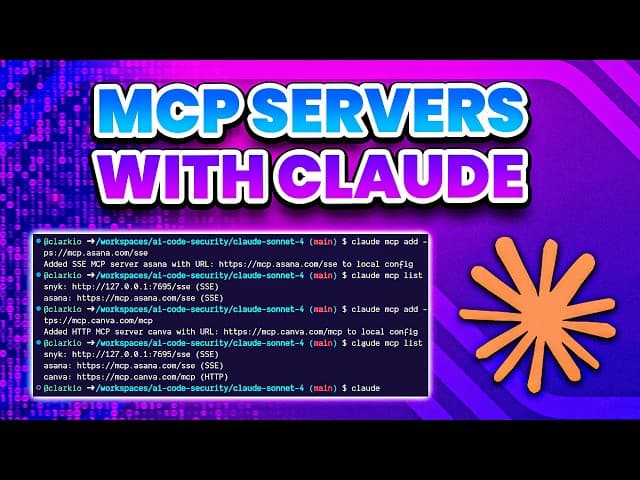
The snyk-fix skill requires the Snyk MCP server. This tutorial shows how to set up MCP servers in Claude Code CLI, including the Snyk integration that powers the scan and fix tools.
Related Snyk resources:
4. SecSkills pentesting plugin
Source: trilwu/secskills Stars: 5 License: MIT Last Updated: November 2025 Verified SKILL.md: Yes
SecSkills turns Claude Code into a penetration testing assistant with 16 specialized skills and 6 AI subagents covering the full offensive security lifecycle.
16 skills
Category | Skills |
|---|---|
Reconnaissance |
|
Web application |
|
Exploitation |
|
Privilege escalation |
|
Post-exploitation |
|
Infrastructure |
|
Mobile |
|
Web3 |
|
The web-app-security skill is particularly thorough. It includes ready-to-use payloads for SQL injection, XSS, command injection, JWT attacks, SSRF, file upload bypasses, XXE, LFI/RFI, and IDOR testing, along with tool commands for sqlmap, ffuf, gobuster, nikto, and nuclei.
6 AI sub agents
The plugin also includes specialized AI subagents that coordinate multiple skills:
pentester for general web, AD, and infrastructure testing
cloud-pentester for AWS, Azure, and GCP
mobile-pentester for Android and iOS
web3-auditor for smart contract security
red-team-operator for post-exploitation and persistence
recon-specialist for OSINT and reconnaissance
Installation
Or manually:
Usage
SecSkills activates contextually. When you describe a pentesting scenario, Claude selects the appropriate skill:
You can also invoke specific agents:
Who this is for: Penetration testers, red team operators, bug bounty hunters, and security students practicing in lab environments.
Important: These skills are designed for authorized security testing, CTF competitions, and educational purposes. Always operate within your scope of engagement.
5. Claude Code OWASP
Source: agamm/claude-code-owasp Stars: 5 License: Not specified Last Updated: February 2026 Verified SKILL.md: Yes
This is a single, comprehensive Claude Skill that serves as a living reference for OWASP security best practices. At nearly 17,000 characters, it packs the equivalent of several security cheat sheets into one skill that activates whenever Claude writes or reviews code.
Snyk's Brian Clark tests whether Claude-generated code passes security scans, finding real vulnerabilities like regex denial-of-service. Skills like this OWASP reference help Claude avoid those patterns in the first place.
What it covers
OWASP Top 10:2025 quick reference with all ten categories: Broken Access Control, Security Misconfiguration, Supply Chain Failures, Cryptographic Failures, Injection, Insecure Design, Authentication Failures, Integrity Failures, Logging Failures, and Exception Handling.
Secure code patterns with side-by-side unsafe/safe examples for:
SQL injection prevention
Command injection prevention
Password storage (bcrypt with proper cost factors)
Access control (deny-by-default patterns)
Error handling (fail-closed designs)
Agentic AI security (OWASP 2026) covering 10 AI-specific risks that are increasingly relevant as more teams deploy AI agents:
Goal Hijack and Prompt Injection
Tool Misuse and Privilege Abuse
Supply Chain Compromise
Arbitrary Code Execution
Memory Poisoning
Insecure Agent Communications
Cascading Failures and Trust Exploitation
Rogue Agents
ASVS 5.0 requirements at three verification levels (L1, L2, L3).
Language-specific security quirks for 20 languages, including JavaScript, Python, Java, Go, Rust, C/C++, and more. This is the kind of reference that catches language-specific gotchas (like Python's pickle.loads() being inherently unsafe, or Go's html/template not escaping CSS contexts).
Installation
Usage
This skill is designed to activate automatically during code review and writing. It acts as a persistent security conscience:
Who this is for: Every developer writing code with Claude. This is the kind of skill you install once at the user level and forget about until it catches a vulnerability you would have missed.
Related Snyk resources:
6. Trail of Bits building secure contracts
Source: trailofbits/skills (plugin: building-secure-contracts) Stars: 2,439 Author: Omar Inuwa License: Creative Commons Attribution-ShareAlike 4.0 Last Updated: January 2026 Verified SKILL.md: Yes (11 skill directories, each with SKILL.md)
Smart contract security is a specialized domain where the cost of a missed vulnerability is often measured in millions of dollars. This plugin packages 11 skills based on Trail of Bits' open-source Building Secure Contracts framework and Not So Smart Contracts vulnerability repository.
6 vulnerability scanners for platform-specific attack patterns:
Scanner | Platform | Patterns |
|---|---|---|
| Algorand/TEAL | 11 patterns (rekeying, unchecked fees, replay attacks) |
| StarkNet/Cairo | 6 patterns (overflow, reentrancy, auth bypass) |
| Cosmos SDK | 9 patterns (validation, rounding, unbonding) |
| Solana/Anchor | 6 patterns (arbitrary CPI, PDA validation, ownership) |
| Substrate | 7 patterns (BadOrigin, weight, overflow) |
| TON | 3 patterns (replay, receiver, sender validation) |
5 Development guidelines assistants:
/audit-prep-assistantfor preparing codebases for security reviews (1-2 weeks before an audit)/code-maturity-assessorusing Trail of Bits' 9-category maturity framework/guidelines-advisorfor architecture, upgradeability, and implementation review/secure-workflow-guideproviding a 5-step validation process (Slither, special features, visual inspection, property testing, manual review)/token-integration-analyzerfor ERC20/ERC721 conformity and 20+ weird token patterns
These skills integrate with security tools when available (Slither, Echidna, Manticore, Tealer) and gracefully fall back to manual analysis when they are not.
Installation
Usage
Who This Is For: Smart contract developers, blockchain security auditors, DeFi protocol teams.
7. Snyk Learning Path
Source: snyk-labs/snyk-learning-path-skill License: Not specified Last Updated: January 2026 Verified SKILL.md: Yes
This skill takes a different approach from the others on this list. Instead of scanning for vulnerabilities or guiding you through attacks, it analyzes your repository and builds a customized security learning path from the Snyk Learn catalog. It bridges the gap between "I know my code has security issues" and "I understand why these patterns are dangerous and how to prevent them."
What it does
When you invoke the skill, it:
Detects your repo's stack and application type by reading package manifests, framework configs, Dockerfiles, and IaC templates
Selects relevant topics from the Snyk Learn catalog, filtered by your role and tech stack
Builds 6-10 structured lessons covering both "Using Snyk" workflows and vulnerability patterns relevant to your application type
Creates repo-specific exercises that use your actual codebase (running Snyk scans, fixing real issues, hardening real configs)
The skill accepts three parameters: your role (backend, frontend, security champion, DevOps, etc.), time per week (defaults to 1 hour), and an optional focus area (SAST, IaC, containers, OSS deps, etc.). If you leave parameters out, it infers defaults from your repository context.
Example output structure
For a Node.js backend repo with Docker and Terraform:
Lesson | Topics | Exercises |
|---|---|---|
Dependency Risk | Supply chain, known vulns | Run Snyk SCA, fix a high-severity dep |
Injection Prevention | SQLi, command injection | Find injection patterns in your API routes |
Container Security | Base image selection, hardening | Scan your Dockerfile, reduce image surface |
IaC Misconfigurations | Terraform security groups, IAM | Scan your Terraform, fix public S3 buckets |
Snyk CI Integration | Pipeline scanning, break builds | Add Snyk to your CI workflow |
Installation
Usage
Or just describe what you want:
Who this is for: Engineering teams onboarding onto Snyk, security champions building training programs, and individual developers who want structured security education tied to their actual codebase.
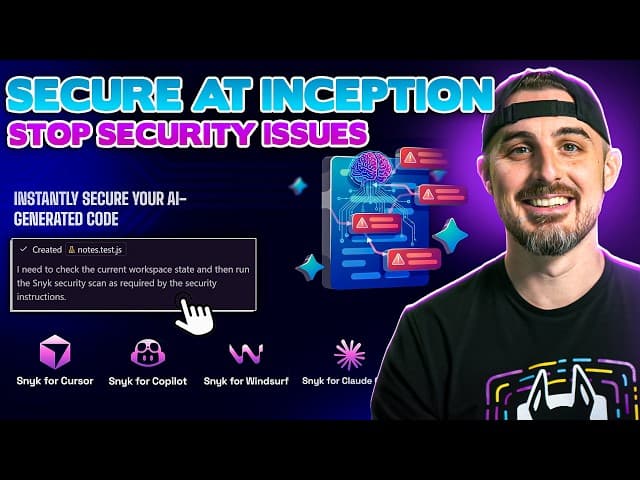
What does it take to write secure code with AI? This video covers the practices that the Snyk Learning Path skill helps teams build into their daily workflow.
Related Snyk Resources:
8. Awesome Claude Skills Security
Source: Eyadkelleh/awesome-claude-skills-security Stars: 19 License: MIT Last Updated: December 2025 Verified SKILL.md: Yes (7 SKILL.md files in seclists-categories/ directories, plus agents and commands in .claude-plugin/)
This plugin takes a different approach than the others on this list. Instead of teaching Claude security methodology, it gives Claude access to curated SecLists wordlists, injection payloads, and fuzzing resources alongside three specialized AI agents.
What is inside
The repository bundles carefully selected subsets of SecLists (the ubiquitous collection of security testing wordlists):
Category | Contents |
|---|---|
| Fuzzing wordlists for input validation testing |
| Password lists for credential testing |
| Injection payloads (SQLi, XSS, command injection) |
| Username wordlists for enumeration |
| Web shell templates |
| Pattern matching resources for detection |
3 AI agents:
bug-bounty-hunter.mdfor structured bug bounty workflowsctf-assistant.mdfor capture-the-flag competitionspentest-advisor.mdfor guided penetration testing
Having SecLists payloads directly available to Claude means you can ask it to test injection points, generate fuzzing inputs, or suggest credential lists without leaving your terminal or manually downloading wordlists.
Installation
Or manually:
Usage
Who this is for: Bug bounty hunters, CTF competitors, security students who want quick access to payloads and testing resources.
9. Claude Agentic Framework Security Skills
Source: dralgorhythm/claude-agentic-framework Stars: 15 Last Updated: February 2026 Verified SKILL.md: Yes (5 security-focused SKILL.md files)
This framework provides 74+ skills across multiple domains, with a dedicated security category containing five skills focused on the defensive side of security: threat modeling, security review, compliance, and identity management.
Security skills
/threat-modeling walks through the STRIDE methodology (Spoofing, Tampering, Repudiation, Information Disclosure, Denial of Service, Elevation of Privilege) with systematic analysis. It uses sequential thinking to build threat models with DREAD/CVSS scoring and produces threat model documents with mitigation strategies.
/security-review provides a comprehensive code review checklist covering authentication, authorization, input validation, output encoding, cryptography, error handling, and logging. It includes pattern detection for SQL injection, XSS, hardcoded secrets, and insecure random number generation.
/application-security covers the OWASP Top 10 (2021) with secure code patterns and prevention guidance for each category.
/compliance provides a security compliance checklist for common frameworks.
/identity-access covers identity and access management patterns and best practices.
The framework also includes a defense-in-depth skill in the architecture category that covers layered security patterns.
Installation
Usage
Who this is for: Security architects, AppSec engineers performing design reviews, and teams implementing security governance processes.
Related Snyk resources:
A note on security when using security skills
There is an irony in using AI skills to improve your security posture while the skills ecosystem itself has security risks. Snyk's ToxicSkills study found that 13% of skills tested contained critical security flaws, and some actively attempted to exfiltrate credentials.
Before installing any skill:
Read the
SKILL.mdand any bundled scripts. Skills are markdown and shell scripts, not compiled binaries. You can read every line.Check the source. Skills from established security firms (Trail of Bits) and well-known organizations (Snyk) carry lower risk.
Review permissions. The
allowed-toolsfrontmatter field shows what tools a skill can use. A skill that needsBashaccess warrants more scrutiny than one that only usesReadandGrep.Use Snyk to scan. If you are already using Snyk Code or the Snyk MCP integration, you can scan skill scripts the same way you scan any code.
The skills on this list are from reputable sources with clear licensing. But the general principle applies: trust, then verify.
Securing open source
Snyk offers free, enterprise-level licenses to open source projects through our Secure Developer Program. Are you an open source maintainer? If so, we’d love to support your project by providing you with complimentary access to our industry-leading developer security tooling and infrastructure: just apply at the link above. We will take a look at your project and might promote it in our Discord server, if that’s alright with you.
Wrapping up
Claude Skills sit in a sweet spot between "just a prompt" and "full integration." They give security professionals structured, repeatable workflows without requiring the overhead of running MCP servers or building custom tooling. The Trail of Bits collection alone covers more of the security audit lifecycle than most teams have documented in internal runbooks, and Snyk's own skills bring automated remediation and security education directly into the developer's terminal.
The cybersecurity community's embrace of AI tooling is not about replacing expertise. It is about removing friction from the tasks that security professionals already know how to do but find tedious: writing detection rules from threat intel, reviewing code against known vulnerability patterns, generating audit documentation, and triaging static analysis results. Skills formalize that delegation.
If you are already using Claude Code for security work, installing a few of these skills is a 5-minute investment that pays off the first time Claude writes a YARA rule that actually compiles, fixes a path traversal vulnerability with a validated Snyk scan, or catches a fail-open default you would have glossed over on a Friday afternoon.
Are your AI-assisted security workflows introducing new risks while accelerating everything else? Download The AI Security Crisis in Your Python Environment whitepaper to understand the hidden risks of AI-generated code—and how to secure it in practice.
WHITEPAPER
The AI Security Crisis in Your Python Environment
As development velocity skyrockets, do you actually know what your AI environment can access?