The Prescriptive Path to Operationalizing AI Security

Brian Rogan

3 février 2026
0 minutes de lectureIn introducing the AI Security Fabric, we have outlined how security must evolve as software is built by humans, models, and autonomous agents working at machine speed. The Fabric defines the architectural shift required to build trust at AI speed, delivered through the Snyk AI Security Platform.
We’re now focusing on the next question: how organizations put that vision into practice.
Operationalizing AI security is not about enabling a single feature or deploying a tool. It requires applying security capabilities deliberately over time–building stability, reducing real risk, and sustaining governance as AI-driven development scales. The Prescriptive Path provides a clear, opinionated framework for doing exactly that.
Crucially, this path cannot be walked with fragmented scanners. Disconnected tools create friction that breaks the feedback loop. To succeed, organizations need a unified platform that connects every stage of this evolution: mastering DevSecOps fundamentals, embedding guardrails into AI coding assistants, and architecting the autonomous defenses required to secure AI-native applications.
What the Prescriptive Path is (and isn’t)
The Prescriptive Path is designed to make AI security actionable. It is an opinionated operating model that helps organizations apply security capabilities in a thoughtful sequence as AI adoption reshapes how software is built. The path focuses on outcomes – building trust, reducing real risk, and sustaining governance – rather than on individual tools or features.
Just as importantly, the Prescriptive Path is not a traditional maturity model. It does not prescribe rigid stages, certifications, or checklists. Organizations don’t “complete” the path or graduate from it. Instead, the path reflects how security focus shifts naturally as environments stabilize, risk becomes manageable, and automation increases.
The path also does not map directly to specific products, platform domains, or organizational structures. It cuts across the Snyk AI Security Platform, guiding when and how different capabilities are applied to achieve meaningful security outcomes.
In short, the Prescriptive Path exists to help organizations move from deploying security tools to operating AI security with intent–at speed, and with confidence.
The shape of the Prescriptive Path
The Prescriptive Path is organized into three phases – Stabilize, Optimize, and Scale – each representing a shift in security focus as AI adoption accelerates.
Rather than prescribing rigid stages or maturity levels, the path emphasizes the outcomes organizations must achieve to move forward with confidence:
Stabilize (Steps 1-2): Establish trust by eliminating blind spots and enforcing guardrails across the SDLC - including at the moment AI-generated code is created.
Optimize (Steps 3-4): Shift the goal from finding vulnerabilities to fixing them. Focus effort on real risk and accelerate trusted remediation, reducing security debt faster than new risk is introduced.
Scale (Steps 5-6): Govern and prove security outcomes at enterprise scale, creating the foundation for orchestration and autonomous defense in AI-native systems.
This path is rarely a straight line. Security is iterative, and organizations frequently revisit foundational acts to reinforce stability even as they push toward the frontiers of automation and orchestration. The value of the Prescriptive Path is not in checking boxes, but in providing clarity on what to focus on next as AI reshapes how software is built, secured, and scaled.
Stabilize - Establish trust and control
Before organizations can move fast with AI, they need stability. As AI accelerates development, risk enters systems earlier and more frequently - through new repositories, dependencies, container images, APIs, and AI-generated artifacts. Without a stable security foundation, velocity doesn’t create advantage. It amplifies blind spots, noise, and uncertainty. The goal of Act 1 is simple but foundational: create a baseline understanding of what exists and ensure new risk doesn’t enter unchecked.
Step 1: Foundational visibility
You cannot secure what you cannot see. The first step is achieving complete visibility into the software supply chain–from source code and open source dependencies to AI models.
Eliminate blind spots across the software supply chain
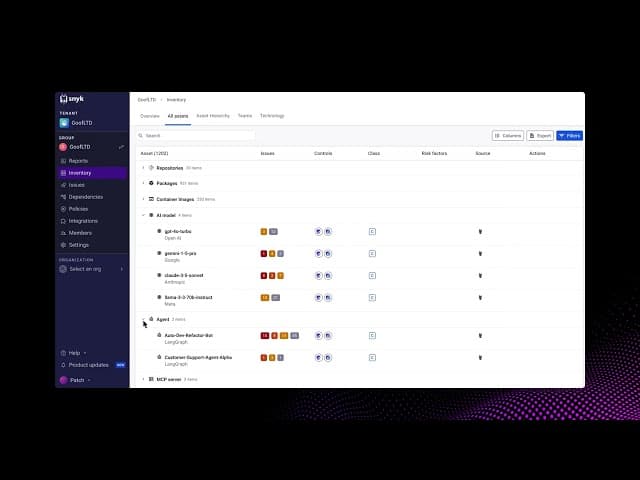
In modern environments, software is created continuously. Snyk provides an automated, continuously updated asset inventory across the full application footprint, spanning first-party code, open source dependencies, container images, infrastructure, APIs, and now AI-native components.

As AI becomes part of the software supply chain, visibility must extend beyond traditional assets. That’s why Snyk treats AI components – such as models, MCP servers, and agents – as first-class assets, enabling organizations to reason about AI risk with the same rigor as code.
Evo completes the picture of software assets within your ecosystem. If you’re a Snyk customer who’s excited about our Asset Inventory and looking to extend that critical visibility to leverage the power of the full Evo orchestration system, we encourage you to explore the Evo guide and read more below.
Ensure what exists is actually being secured
But visibility alone isn’t enough. Control requires knowing not just what exists, but what is being protected.
Snyk enables teams to apply coverage policies that classify assets, attach business context, and enforce security expectations consistently across the organization. This moves security from ad hoc scanning to intentional ecosystem coverage.

To reduce manual effort and close gaps at scale, Snyk is extending this further with automatic security coverage, ensuring that new repositories, packages, and container images are protected by default as they appear. Deepened container registry synchronization ensures new images and vulnerabilities are surfaced as they emerge, not after the fact.
The result is a security foundation that scales with development - without relying on manual configuration or tribal knowledge.
Restore trust in the security signal
Trust is the currency of stability. If security findings are noisy, incomplete, or inconsistent, automation breaks down and confidence erodes.
Snyk is built on industry-leading application security engines across SAST, open source, containers, and more–validated by independent analysts and trusted at enterprise scale. This trust is reinforced by speed: organizations report 80% faster scan times with Snyk, ensuring that deep security analysis never becomes a bottleneck.
Snyk continues to invest here, expanding detection accuracy and coverage - including upcoming capabilities to detect secrets before they silently become part of codebases or AI-generated output.
Equally important, that trusted signal spans the ecosystems teams actually use–from modern languages and frameworks to long-lived, mission-critical systems. Upcoming expanded support for languages such as C, C++, and COBOL will ensure stability covers the full breadth of your technology estate.
Step 2: Prevention and AI guardrails
Visibility reveals risk, but prevention stops it from growing. This step shifts the organization from reactive scanning to proactive stabilization, ensuring that as development accelerates, it doesn't simply generate risk faster than you can fix it.
Enforce guardrails to stop risk at the source
Snyk has been a developer-first security company since being founded. For years, our IDE extensions have empowered developers to test and fix preventable issues locally, saving the costly rework that comes from catching defects later in the pipeline.
Snyk embeds these prevention guardrails across the entire SDLC – in the IDE, pull requests, and CI/CD pipelines – ensuring issues are caught early before they spread downstream and compound risk.
Securing AI-generated risk at inception
While these guardrails remain imperative, AI accelerates the pace of creation and the risk of bottlenecks. If AI-generated code is only checked at the merge or build stage, security becomes a blocker. Teams are forced into a dangerous trade-off: delay revenue-generating value to fix issues, or bypass security to ship on time.
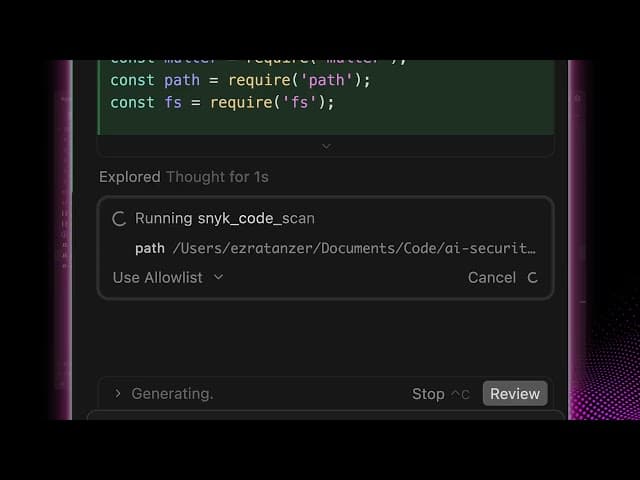
Snyk Studio applies our proven developer-first philosophy to this new era. Just as our IDE extensions secure human-written code, Snyk Studio embeds security guardrails directly into AI coding assistants, providing real-time, context-aware feedback as code is generated.
Developers can enable these automated protections in just a few clicks using streamlined setup flows for the tools they already use, such as Cursor, Windsurf, and Copilot - and starting today, Gemini CLI and Claude Code as well.
At the same time, enterprises can centrally define and distribute secure-by-default behavior across teams. New comprehensive documentation and guidelines for managed distribution are now available, making it easier than ever to standardize a scaled rollout of Snyk Studio across your organization.
Optimize - Focus effort and accelerate fixes
Once stability is established, the challenge changes. At AI speed, organizations are no longer overwhelmed because they lack data; they’re overwhelmed because they have too much of it. Vulnerabilities accumulate faster than teams can triage them. Severity scores alone fail to reflect real-world impact. And even when priorities are clear, fixes stall if developers don’t trust the remediation path. The goal now is to turn signal into action, focusing effort on what truly matters and accelerating fixes where developers work.
Step 3: Strategic prioritization
Not all vulnerabilities matter equally. At this step, organizations use comprehensive risk context and analysis to distinguish between theoretical risks and real threats, ensuring teams focus only on the issues that actually matter.
Move beyond severity to real risk
Traditional security prioritization breaks down at scale. Severity tells you how bad something could be in theory, not how much it actually matters to your application. In AI-accelerated environments, that gap leads to noise, wasted effort, and stalled remediation.
Snyk prioritization brings real-world context together through its Risk Score, combining severity with exploit maturity, reachability, and business context. This ensures teams focus on vulnerabilities that pose actual risk–not theoretical exposure.
To support developers as decisions are made, we’re working to make this intelligence available directly in the IDE and CLI, shifting prioritization earlier and reducing friction across workflows.
Reachability plays a critical role here. By answering a simple question – is vulnerable code from this dependency actually executable in this application? – reachability dramatically reduces noise and sharpens focus. Expanded support for additional ecosystems beyond Java, JavaScript, TypeScript, and C#, including Python, ensures this signal applies broadly across modern stacks.

For open source risk specifically, Snyk has reimagined prioritization to focus on dependencies, not individual CVEs - helping teams identify high-impact upgrades that resolve multiple issues at once. This streamlined approach is driving real impact:

Build confidence in the fix, not just the priority
Even when teams know what to fix, hesitation remains. Security debt persists when developers don’t trust that a fix is safe to apply. Fear of breaking production slows remediation, especially in complex dependency trees.
To address this, Snyk will introduce Breakability Risk for suggested open source dependency upgrades. By analyzing how an upgrade impacts a specific codebase, Snyk helps teams distinguish between fixes that are safe to apply and those that require more caution.
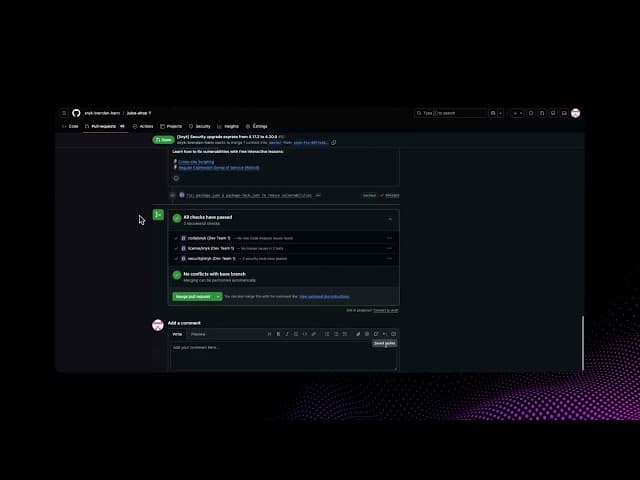
This transforms remediation from a high-stakes gamble into a predictable, confidence-driven process, enabling teams to merge more fixes faster, with less fear of a breaking change.
Step 4: AI-accelerated remediation
Once teams trust both the priority and the fix, remediation can finally accelerate. Here, we move from manual patching to AI-assisted remediation that empowers developers to resolve issues securely and autonomously without ever leaving their workflow.
Accelerate remediation where developers work
With Snyk, fixes are delivered directly where developers work, through Snyk Agent Fix in the IDE and pull request. This proximity matters: finding and fixing issues upstream in the IDE results in a 75% decrease in remediation time.

Through intelligent remediation in Snyk Studio, developers can simply ask their AI assistant to resolve an issue with Snyk. We’ve now made this even simpler with new Remediation Workflows that can trigger an end-to-end remediation playbook within a codebase. Instead of walking an AI agent step-by-step through a fix, developers just type /snyk-fix and Studio does the rest.
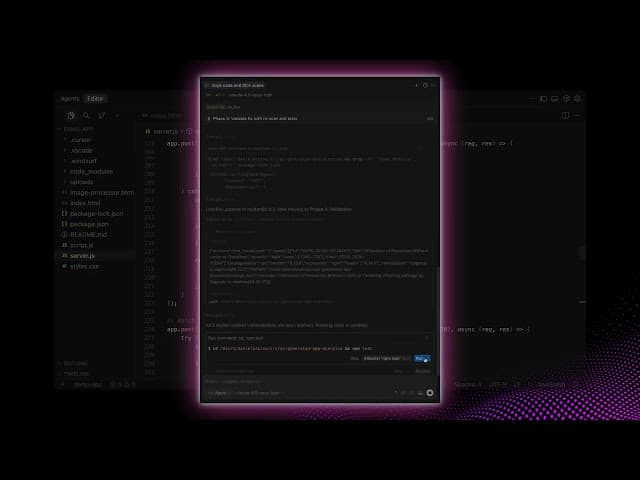
Looking ahead, this same foundation enables more autonomous remediation workflows, where agents can plan, validate, and prepare safe fixes end-to-end, with the right level of human oversight.
Validate runtime risk with deterministic signal
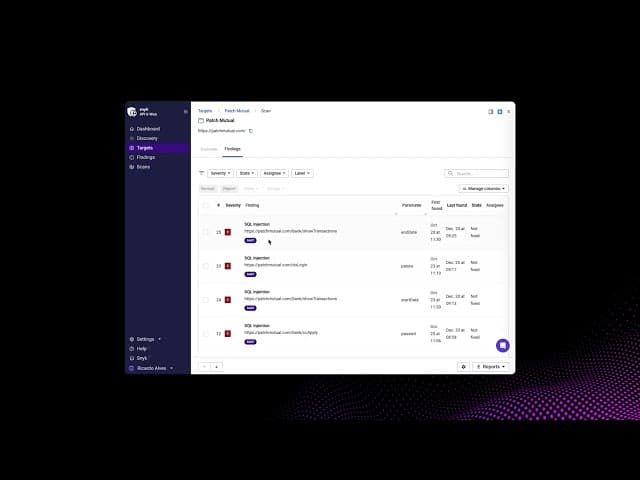
For runtime DAST findings, remediation requires an additional layer of trust. By correlating our best-in-class SAST and DAST engines, Snyk can now automatically link runtime targets directly to their underlying code repositories, whether it's a single monolith or microservices spanning fifty repos. By mapping runtime findings directly back to the exact lines of code responsible, developers can move straight from detection to fix, without hunting, without guesswork.
Scale - Govern, prove, and orchestrate
As security becomes faster and more automated, the final challenge emerges: scale. At AI speed, it’s not enough to detect and fix risk efficiently. Organizations must be able to govern security consistently, prove impact in business terms, and extend automation safely as AI-driven development expands across teams, applications, and agents. The goal of Act 3 is to scale security outcomes with confidence - ensuring governance, measurement, and automation reinforce each other rather than introduce new risk.
Step 5: Govern, measure, and prove
To scale security, manual reviews must be replaced by automated policy enforcement. At this step, organizations prove compliance continuously by codifying and enforcing policies across the entire software factory, ensuring that speed never comes at the cost of control.
Govern security without slowing teams down
As remediation accelerates, organizations need clear guardrails to ensure decisions are intentional, reviewed, and auditable - especially in regulated environments. Snyk enables security teams to define and enforce policy consistently across development workflows, without reintroducing friction.
Capabilities such as Ignore Approval Workflow ensure that when developers request to ignore an issue, that exception is documented, justified, and governed - preserving visibility and accountability even as teams move faster.

This balance is critical: security must empower developers to act quickly, while giving leaders confidence that risk is being managed deliberately.
Prove impact with outcome-driven reporting
Sustained security requires proof, not just to satisfy governance, but to celebrate success and reinforce the positive behaviors that drive cultural change.
Security leaders are increasingly expected to answer simple questions:
Are our guardrails actually working?
Is risk being reduced - or just shifting?
Is AI accelerating productivity without increasing exposure?
To support this, Snyk has significantly enhanced its analytics and reporting experience. A broad library of ready-to-use reports provides instant visibility into risk posture, compliance status, and program performance–while still allowing customization to build a true security mission control.

For organizations with complex data environments, extensibility through APIs and integrations enables Snyk data to be analyzed alongside broader business metrics - ensuring security outcomes are visible where strategic decisions are made.
Connect prevention, education, and outcomes
Scaling security isn’t just about fixing issues; it’s about preventing them. For organizations using Snyk Learn, new impact and opportunity reporting connects developer education directly to security outcomes, showing how training influences both remediation and prevention across teams.
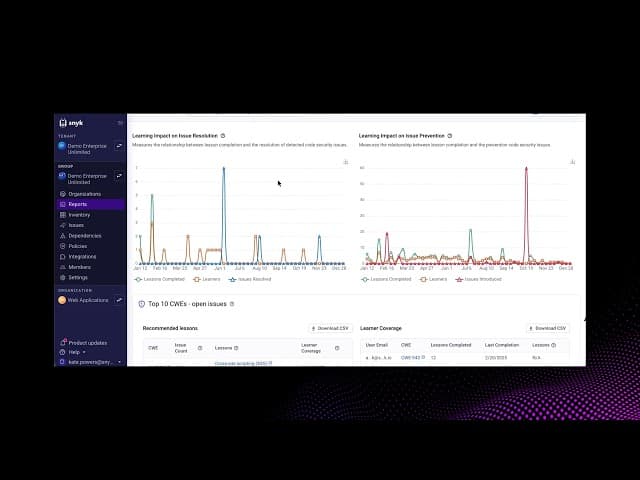
Looking ahead, Snyk is extending this focus with new prevention reporting, designed to quantify how much risk is stopped before it ever enters production - turning prevention into a measurable return on investment.
Similarly, upcoming reporting for Snyk Studio will provide visibility into how AI guardrails are applied across organizations, offering insight into adoption, effectiveness, and secure-by-default behavior at scale.
Together, these capabilities allow leaders to move beyond activity metrics - and manage security based on outcomes. Once security is measurable and repeatable, scaling into agentic orchestration becomes possible.
Step 6: Agentic orchestration
Orchestration is the capstone of the Prescriptive Path. It is only possible because of the stability and optimization achieved in steps 1 through 5: you cannot automate what you cannot see, and you cannot safely orchestrate defense without trusted remediation. With that foundation established, security can finally keep pace with AI-native innovation.
Treat AI systems as first-class application assets
AI-native applications aren’t static. They’re living systems made up of models, prompts, agents, and tools that continuously change at runtime. To secure them, security has to move beyond infrastructure-level thinking and treat AI components as first-class application assets.
At this stage, the Evo orchestration system continuously builds a living map of how AI applications are composed and how they evolve. This eliminates the blind spots of traditional scanning and gives teams a real-time understanding of how their AI systems actually operate, not just how they’re configured.
AI Asset Discovery within Evo shows how security leaders can finally gain real-time command and control over their AI environments.

Govern AI behavior, not just configuration
In agentic systems, risk doesn’t come solely from static misconfigurations; it emerges from behavior. As agents make decisions, invoke tools, and access data, security must govern intent, not just settings.
Orchestration within Evo enables teams to define and enforce policies around what AI systems are allowed to do, continuously evaluating those controls across development and runtime. This allows organizations to manage the inherent unpredictability of autonomous systems without slowing innovation.
From visibility to intelligence and finally to action
The final step is moving from awareness to autonomy. By correlating visibility, governance, and behavioral signals, Evo enables security systems to operate as an active defense layer. Instead of simply flagging issues, Evo connects detection directly to remediation, enabling responses at machine speed. The result is a self-adapting security posture, one that doesn’t always act as just a gatekeeper, but as a scalable enabler of safe, agent-driven innovation. Take the first step on your path to Discovery today and find hidden AI components in your codebase. The fastest way to get started with Evo today is by accessing our free AI-BOM CLI.
From path to practice
The Prescriptive Path provides a clear way to operationalize AI security, but it doesn’t exist in isolation. Across all three phases, organizations are applying capabilities delivered through the Snyk AI Security Platform to achieve the outcomes defined by the AI Security Fabric.
The platform provides the unified signal, guardrails, automation, and governance. The path provides the structure for applying them deliberately, in the right order, as AI adoption accelerates. Together, they enable a fundamental shift in how security operates:
From reactive detection to enforced prevention
From noisy backlogs to focused, accelerated remediation
From fragmented controls to governed, measurable security at scale
This operational efficiency directly translates into business value. According to Forrester, organizations using Snyk achieve a 288% return on investment with payback in less than six months. This is how security becomes resilient at AI speed–woven into creation itself, rather than bolted on afterward.
AI-driven development isn’t slowing down. The organizations that succeed will be those that move beyond experimentation and take an intentional approach to securing it - stabilizing trust, optimizing risk reduction, and scaling security with confidence into automation and orchestration.
See the Prescriptive Path in action
If you’re ready to move from strategy to execution, the next step is seeing how this path comes to life in real development workflows.
Sign up for Snyk’s launch event on February 11 to learn more about how the Snyk AI Security Platform delivers the AI Security Fabric - and how the Prescriptive Path helps organizations operationalize AI security with confidence.
February 11, 2026
Unveiling A New AI Security Fabric
Join us to explore how to bridge the gap between AI-driven velocity and security governance, and embed trust into every line of code, model, and agent.