Six Principles for Rethinking DevSecOps for AI

As organizations accelerate AI adoption, from AI coding assistants to agentic workflows and LLM-powered applications, a new security paradigm is essential. The traditional DevSecOps principles that transformed application security must now evolve to address the unique challenges of AI systems: prompt injection attacks, model theft, data poisoning, and supply chain vulnerabilities in ML pipelines.
These six principles provide a comprehensive framework for AI Security Mastery, helping teams build and deploy AI systems that are both innovative and secure.
1. Developer-first AI security
Security tools and workflows must meet developers where they are, especially as they become "context engineers." With AI coding assistants generating significant portions of code, developers need real-time security feedback integrated directly into their workflows, not separate tools that slow them down.
AI-generated code can introduce vulnerabilities at unprecedented speed. Security teams must transform from gatekeepers to enablers, providing developers with instant insights on the quality and security risks of AI-generated code.
Our principle: Dev-first security represents a fundamental shift where developers take primary ownership of security responsibilities, including the code AI writes for them.
Key practices:
Integrate security scanning directly into IDEs where AI code generation happens.
Provide real-time feedback on AI-generated code vulnerabilities.
Enable developers to understand AI-specific risks, like package hallucinations.
Upskill developers on AI security concepts through embedded learning.
Supporting links:

4 Hidden AI Coding Risks and How to Address Them: Covers security vulnerabilities introduced by AI coding tools like ChatGPT and GitHub Copilot.
2. Secure AI by design
Security must be embedded from the first prompt, not bolted on after deployment. AI systems should be architected with threat modeling that considers AI-specific attack vectors: adversarial inputs, model manipulation, data exfiltration through prompts, and supply chain compromise of models and training data.
The cost of discovering AI security flaws post-deployment is exponentially higher; a poisoned model or leaked training data cannot simply be "patched."
Our principle: Addressing AI security flaws early is dramatically more cost-effective; vulnerabilities discovered in deployed AI systems can require complete model retraining and massive remediation efforts.
Key practices:
Conduct AI-specific threat modeling before development begins.
Apply secure-by-default configurations for AI components.
Implement guardrails and safety layers as foundational architecture.
Design AI systems with the OWASP Top 10 for LLMs in mind from inception.
Supporting links:
Securing Model Context Protocol (MCP) with Vandana Verma: OWASP leader and Snyk security expert discusses securing AI protocols and the LLM Top 10.
3. Shared AI accountability and collaborative culture
AI security requires collaboration across development, security, operations, data science, and ML engineering teams. Clear ownership prevents critical gaps. Who is responsible when an AI model makes a harmful decision? When training data is compromised? When does an agent take unintended actions?
Security champions programs must expand to include AI champions who understand both traditional security and AI-specific risks, like prompt injection, model theft, and excessive agency.
Our principle: AI security unites multiple disciplines with shared accountability. Developers, security engineers, and ML teams use their individual expertise to support the collective goal of delivering AI systems that are fast, secure, and trustworthy.
Key practices:
Establish clear ownership for AI model security, data security, and inference security.
Create AI security champions who bridge ML engineering and security teams.
Foster a culture where AI risks are openly discussed and addressed collaboratively.
Define accountability for AI agent actions and autonomous decision-making.
Supporting links:
Snyk's Danny Allan on Making Security Developer-Friendly: Building successful security champion programs and shifting left without creating friction.
4. Automation throughout the AI lifecycle
Embed automated security checks across the entire AI lifecycle, from data ingestion and model training to inference and production monitoring. Manual security reviews cannot keep pace with AI development velocity. Policy-as-code enables consistent enforcement across all AI applications and agents.
AI systems require continuous security monitoring that goes beyond traditional SDLC stages to include model behavior analysis, prompt/response monitoring, and AI-specific anomaly detection.
Our principle: AI security needs to be as automated as possible, across development workflows, model pipelines, and runtime inference.
Key practices:
Implement automated scanning of AI-generated code in CI/CD pipelines.
Deploy continuous AI red teaming to test for adversarial vulnerabilities.
Automate prompt injection testing and model robustness checks.
Enable policy enforcement for AI model usage and agent permissions.
Supporting links:
Building Security into your Pipelines Using Snyk: Practical walkthrough of automating security checks in your development pipeline.
5. AI-specific actionable intelligence
Security findings must be contextual to AI systems; generic vulnerability alerts create noise and miss AI-specific risks. Teams need clear explanations of prompt injection vulnerabilities, model weaknesses, and data exposure risks with actionable remediation guidance.
AI security intelligence must reduce false positives while surfacing the risks that matter: vulnerable dependencies in ML pipelines, exposed model endpoints, and compromised training data sources.
Our principle: Optimize AI security reporting for accuracy and relevance. Surface AI-specific threats like prompt injection, model theft, and data poisoning with clear remediation paths.
Key practices:
Provide context-aware vulnerability intelligence for AI systems.
Distinguish between code vulnerabilities and AI-specific vulnerabilities.
Offer clear remediation guidance for AI threats (not just CVE references).
Reduce alert fatigue by prioritizing exploitable AI risks.
Supporting links:
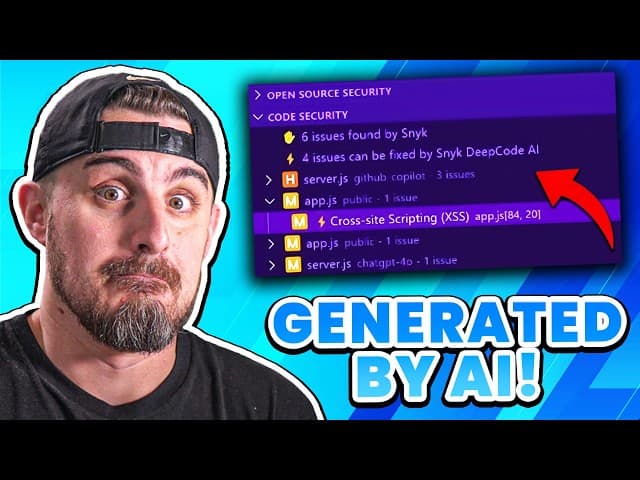
Exploiting AI-Generated Code: Shows real examples of security vulnerabilities in AI-generated code and how to identify them.
6. AI governance and continuous improvement
Measure AI security outcomes with specific KPIs: time to detect prompt injection attempts, model vulnerability remediation rates, AI agent policy compliance, and supply chain integrity for ML dependencies. Governance enables benchmarking and drives security maturation.
AI-specific governance frameworks like AI-SPM (AI Security Posture Management) and AI-BOMs (AI Bill of Materials) provide visibility into the AI attack surface that traditional tools miss.
Our principle: AI governance supports the creation and management of policies while enabling security leaders to benchmark AI security posture, set strategy, and measure continuous improvements across all AI assets.
Key practices:
Implement AI Security Posture Management (AI-SPM) for comprehensive visibility.
Create an AI Bill of Materials (AI-BOMs) to track models, data sources, and dependencies.
Define KPIs specific to AI security, such as prompt injection detection rate, model integrity, and agent compliance.
Establish governance policies for AI model usage, data handling, and agent permissions.
Supporting links:
What is ASPM? (Application Security Posture Management): Covers security posture management concepts that extend to AI-SPM for governing AI systems.
Laying the foundation for AI security
The six core DevSecOps principles have proven their value in securing traditional software development. As AI transforms how we build and deploy applications, these principles must evolve to address a new threat landscape, one where code is generated at machine speed, models can be manipulated, and autonomous agents make real-time decisions.
Organizations that master AI security through developer-first tools, secure-by-design architecture, shared accountability, comprehensive automation, AI-specific intelligence, and robust governance will be positioned to innovate safely in the AI era.
Ready to turn AI security principles into action? Learn how security leaders are responding to today’s AI-driven threat landscape, and what it takes to protect AI-generated code in production. Download the AI Security Crisis: Securing Python in the Age of AI report.
WHITEPAPER
The AI Security Crisis in Your Python Environment
As development velocity skyrockets, do you actually know what your AI environment can access?