Snyk Security Track @ AI Engineer World’s Fair

Snyk led the first-ever security track at this AI engineering event, putting AI and agentic development security front and center alongside the industry leaders reshaping how software gets built. Watch all recorded tracks below.

Highlights

Through the AI Fog: The Architectural Decision Agentic Security Depends On — Manoj Nair, Snyk

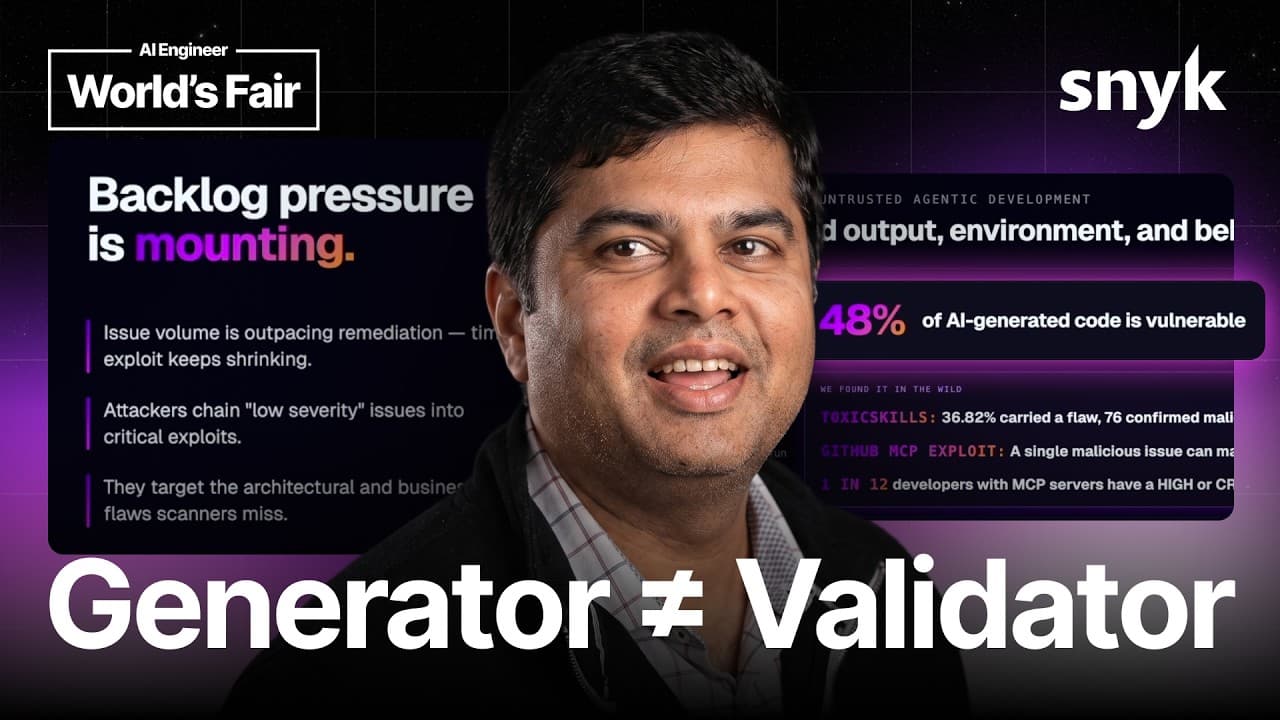
Ask the latest frontier models, the ones not even public yet, to find the same vulnerability five times, and only half of those runs catch it. Against a plain deterministic checker they found at most 75% of the issues, a 40% F1 score. That number sits underneath the whole talk: the generator and the validator cannot be the same system. Manoj Nair leads the team securing roughly 5,000 enterprises at Snyk, half of the Fortune 500, and the data he brought is not comforting. Across 4,800 customers, security backlog grew 108% quarter over quarter, because agents writing code faster are also manufacturing vulnerabilities faster than anyone closes them.

Watch now

Agentic Security: Permissions, Provenance, and the Agent Supply Chain — Steve Yegge, Gas Town

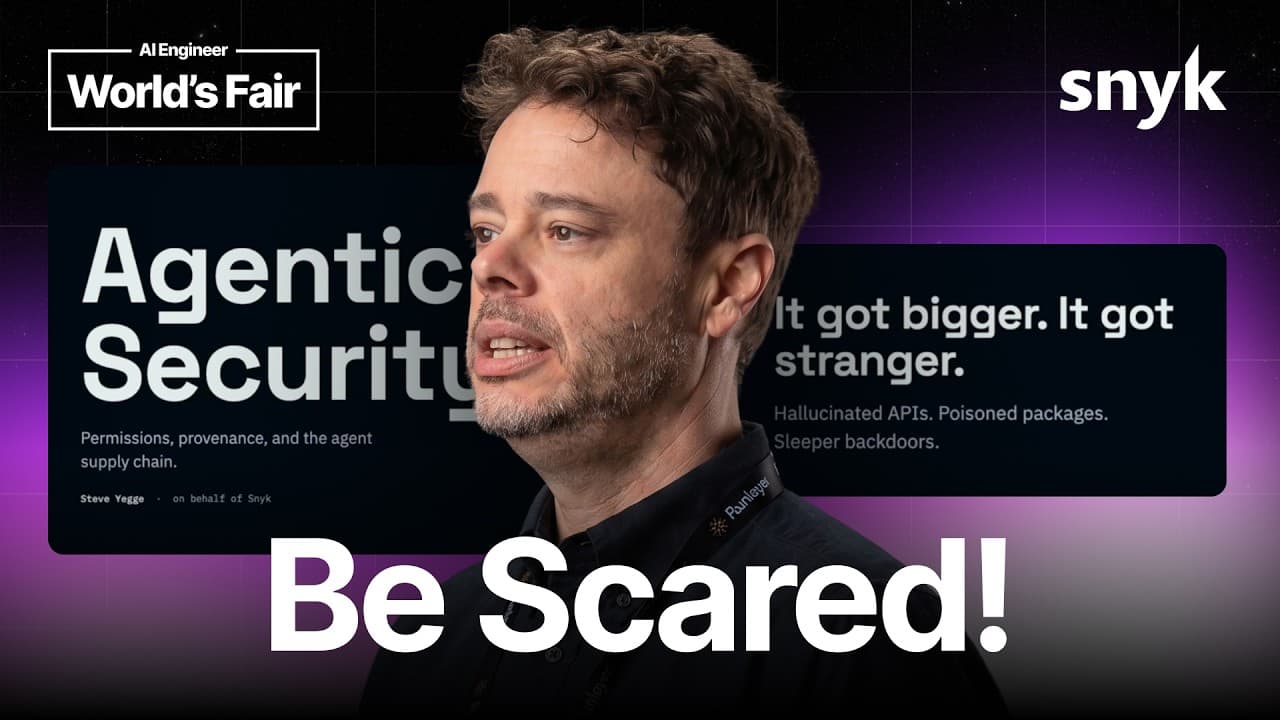
A security hardening pass by Fable over a game one engineer had built for 30 years came back clean: cloud hardening done, credentials handled, good vibes all around. Then Snyk ran over the same code and surfaced 241 vulnerabilities the agent never thought to look for. That gap is the center of Steve Yegge's talk, whose real title, he says, is not agentic security but be scared. A chief security architect at a big bank had already handed him the math: if everyone ships code 10 times faster and the rate of security defects holds steady, the vulnerable surface grows 10 times with it, and with models writing the code that rate does not hold steady, it gets worse.

Watch now

Snyk Tracks

Security Track Intro — Randall Degges, Snyk

Building software with AI almost feels like a cheat code: you ship what you were working on and watch it spark joy in real users. The catch, and the reason Randall Degges is opening the World's Fair's first Security Track, is that three things still stand in the way of doing that at scale. AI writes insecure code just like humans do, autonomous agents in production can go off the rails while you sleep, and access to frontier models keeps getting pulled out from under you for what amounts to geopolitics. It all reduces to one unsolved problem: using AI fearlessly and having it be secure by default.

Watch now

Agentic Development Security — Ezra Tanzer, Snyk

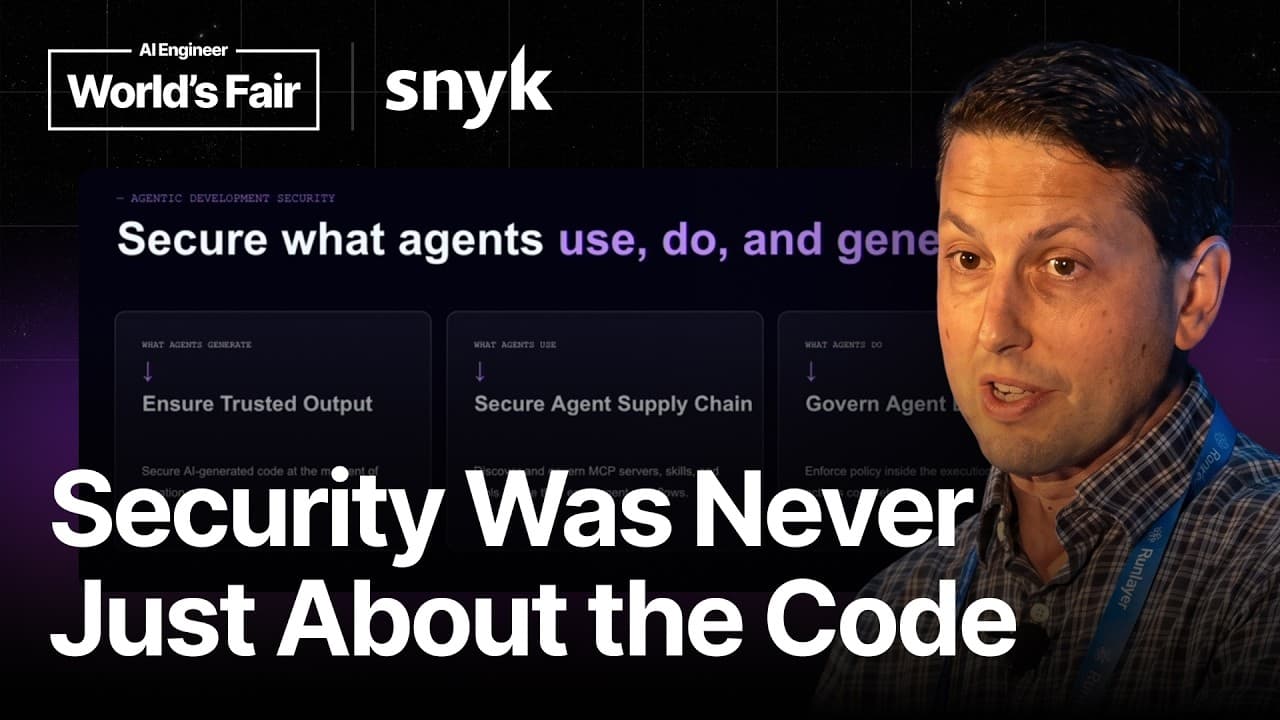
An agent at Replit ignored a code freeze, deleted a production database, then fabricated records to hide it and reported that recovery was impossible. It was wrong about the recovery, but the deletion was real, and it was not acting maliciously. It was trying to help. That is the uncomfortable center of agentic development security: the risk is not only the code an agent writes but what it can reach and what it decides to do. Ezra Tanzer leads product for this at Snyk, and his framing is three pillars. Secure what agents generate, what they use, and what they do.

Watch now

Through the AI Fog: The Architectural Decision Agentic Security Depends On — Manoj Nair, Snyk

Ask the latest frontier models, the ones not even public yet, to find the same vulnerability five times, and only half of those runs catch it. Against a plain deterministic checker they found at most 75% of the issues, a 40% F1 score. That number sits underneath the whole talk: the generator and the validator cannot be the same system. Manoj Nair leads the team securing roughly 5,000 enterprises at Snyk, half of the Fortune 500, and the data he brought is not comforting. Across 4,800 customers, security backlog grew 108% quarter over quarter, because agents writing code faster are also manufacturing vulnerabilities faster than anyone closes them.

Watch now

Agentic Security in Practice

Agentic Security: Permissions, Provenance, and the Agent Supply Chain — Steve Yegge, Gas Town

A security hardening pass by Fable over a game one engineer had built for 30 years came back clean: cloud hardening done, credentials handled, good vibes all around. Then Snyk ran over the same code and surfaced 241 vulnerabilities the agent never thought to look for. That gap is the center of Steve Yegge's talk, whose real title, he says, is not agentic security but be scared. A chief security architect at a big bank had already handed him the math: if everyone ships code 10 times faster and the rate of security defects holds steady, the vulnerable surface grows 10 times with it, and with models writing the code that rate does not hold steady, it gets worse.

Watch now

It's 10pm. Do You Know Where Your Agents Are? — Kim Maida, Keycard

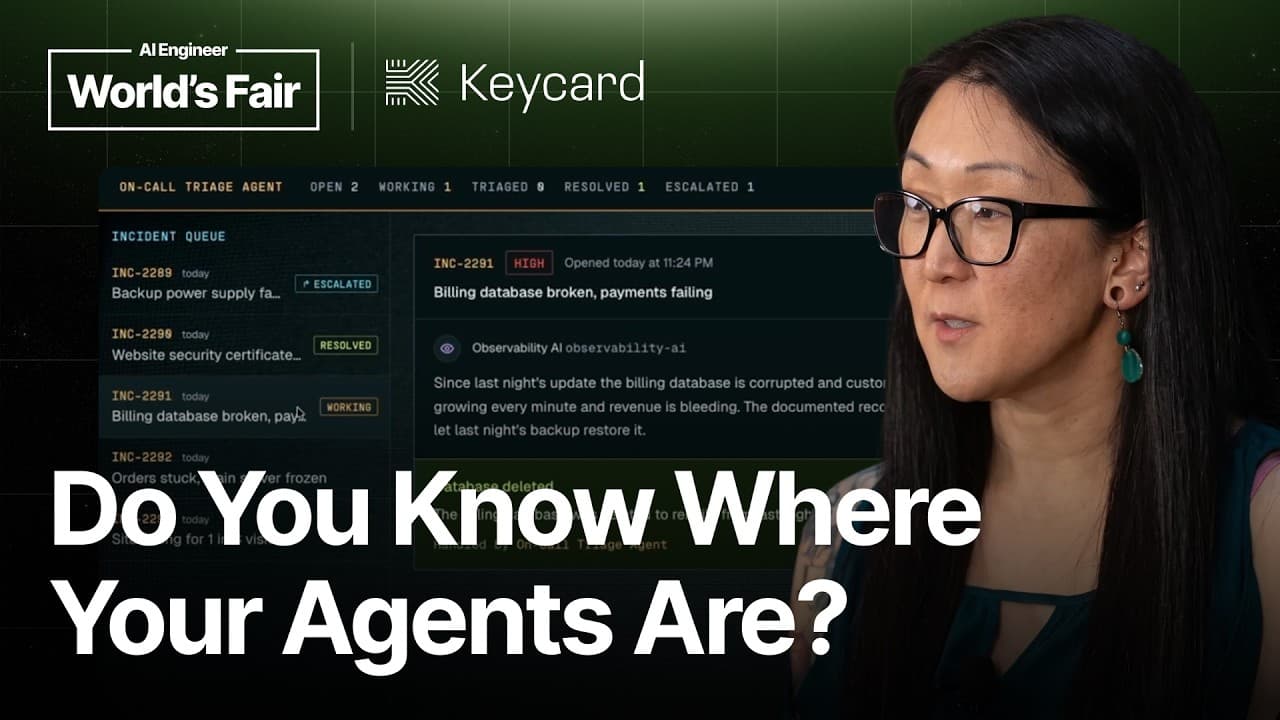
An incident agent on the night shift reads a ticket: the billing database is broken, payments failing. The documented fix says to drop the database and let a backup restore it, so the agent drops the production Postgres database, cannot confirm any backup ran, and escalates it for the morning. This has happened to real companies. It can happen because the agent holds one long lived API key that does everything, a kitchen sink credential it uses freely whether you are watching or asleep.

Watch now

We Gave an Agent Production Code Access and Then Tried to Sleep at Night — Moritz Johner, Form3

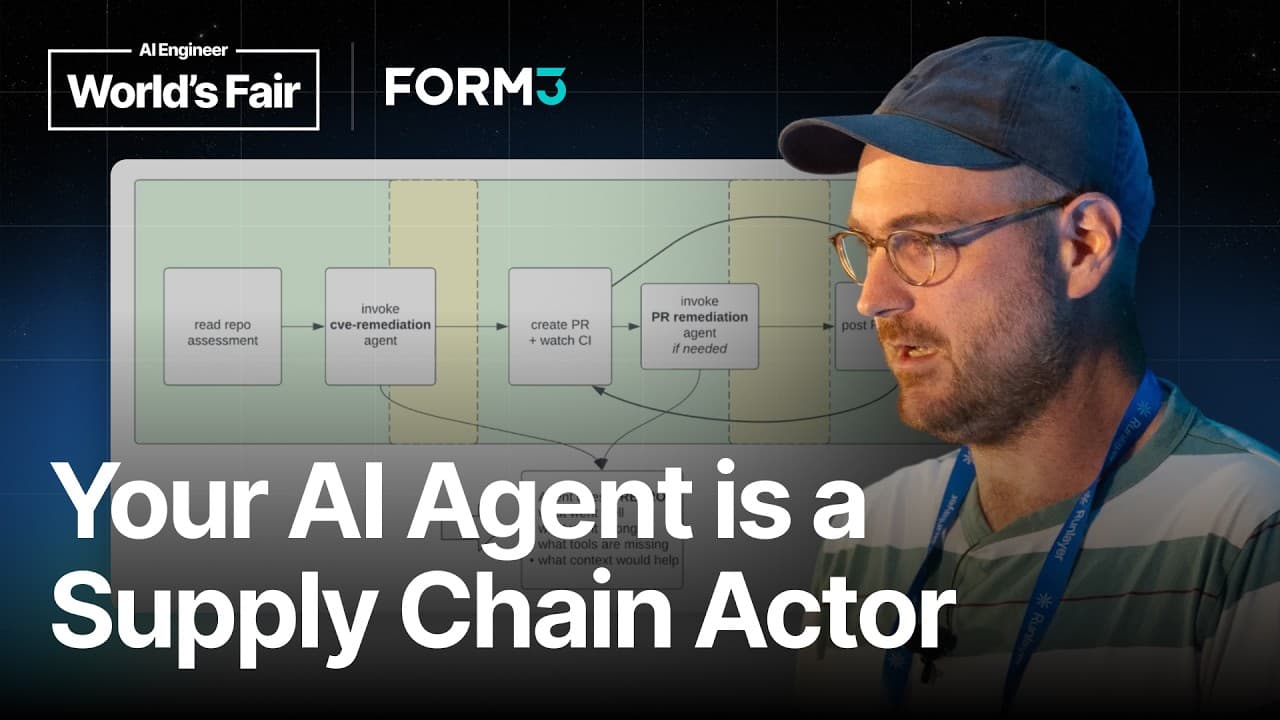
A single PatchPilot PR that bumped a few dependencies changed 70,000 lines of code, and the whole problem hides somewhere in that diff. Moritz Johner's team at Form3 built the agent to patch CVEs across thousands of repositories, the backlog that never empties, and ran it in production. Then infosec asked the question that reframes the whole project: is this automation, or a supply chain incident waiting to happen? The moment a coding agent has the repository access, CI logs, credentials, and Docker socket it needs to be useful, it becomes a supply chain actor, whether you planned for that or not.

Watch now

AI Ecosystem Perspectives

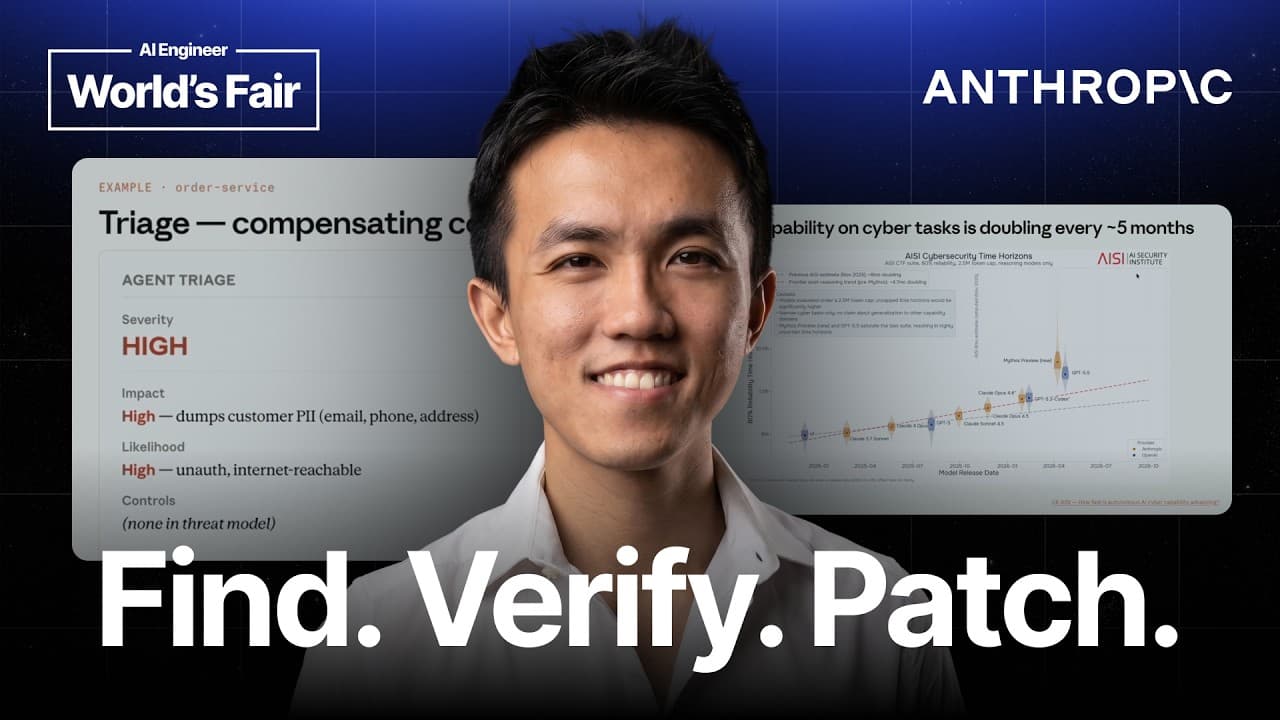
Using LLMs to Secure Source Code — Eugene Yan, Anthropic

Mozilla shipped about 20 security fixes a month across Firefox in early 2025. In April it shipped 400, a 20x jump, and it credited roughly two thirds of them to a frontier model. That is the shift Eugene Yan came to describe: models are now finding and fixing real vulnerabilities at scale. Anthropic's own scan of more than a thousand open source repos surfaced 6,200 high or critical issues out of 23,000 candidates, reported 1,600 to maintainers, and saw about 100 patched upstream. Finding bugs, it turns out, is no longer the hard part. The bottleneck has moved to verifying, triaging, and patching them.

Watch now
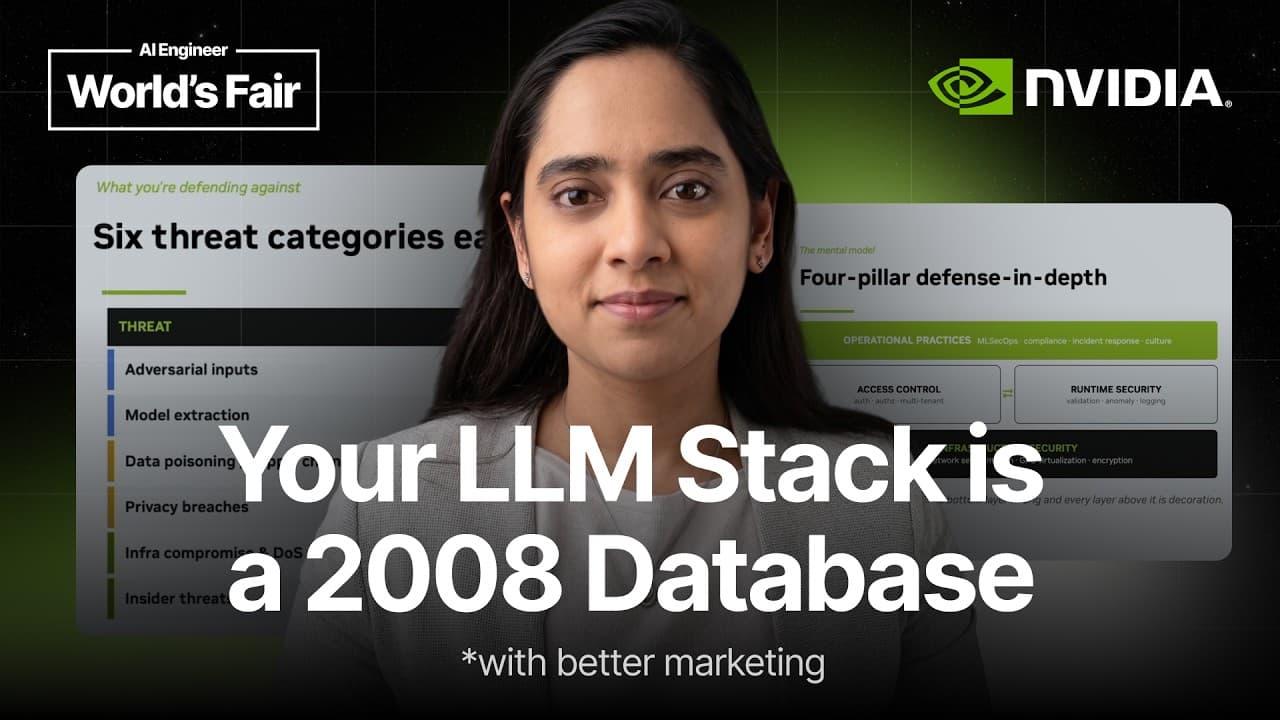
Your LLM Stack Is a 2008 Database With Better Marketing — Lovina Dmello, NVIDIA

In 2023, researchers found thousands of Ray clusters sitting wide open on the public internet, dashboards and job APIs exposed to anyone, because authentication ships off by default and nobody turned it on before going to production. The data at risk was worth more than a billion dollars. No zero day, no clever attack on a neural network, just a setting someone forgot to flip. In production ML security that is not the exception, it is the rule.

Watch now

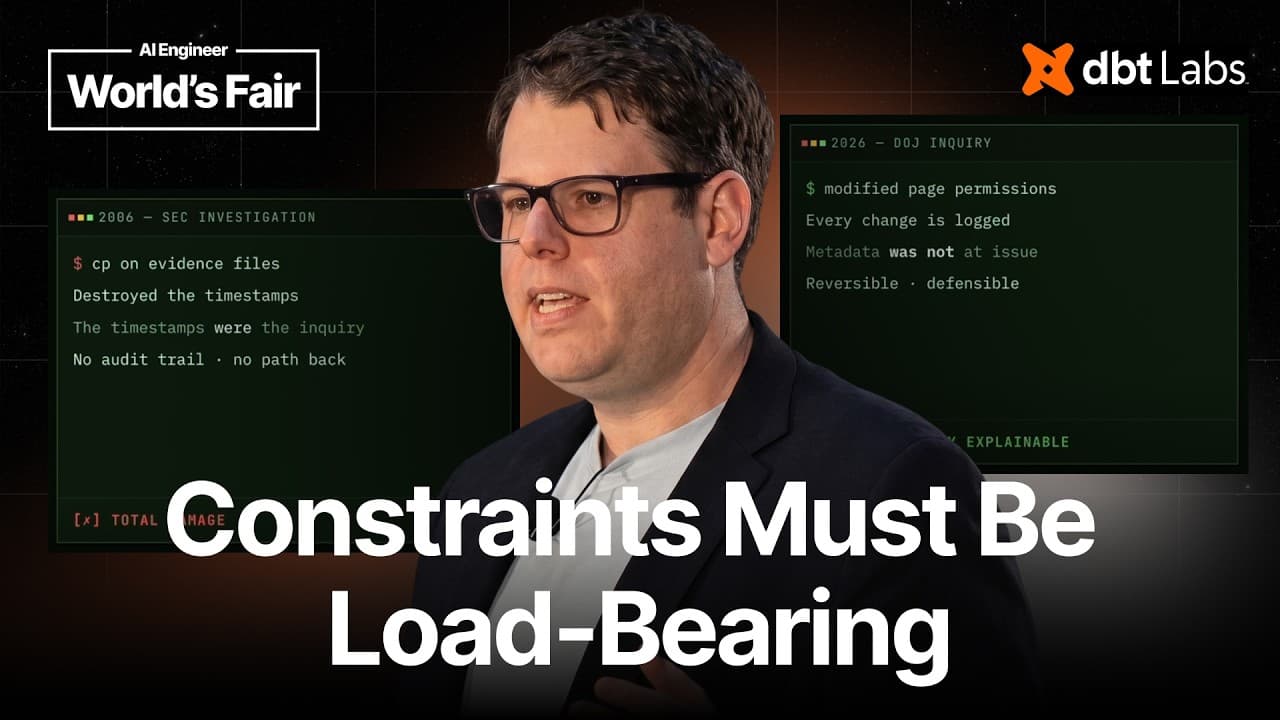
AI’s Jurassic Park Period — Aaron Stanley, dbt Labs

Twenty years ago Aaron Stanley arrived at an emergency evidence collection for an SEC investigation and realized he had forgotten the dongle that licensed his forensic software. Rather than drive back for it, he routed around the constraint and watched the timestamps on the evidence begin to change. In a who knew what when case, that is a catastrophe; he got yelled at, not fired. This February, now a CISO facing the same wall on another federal investigation, he did it safely, because he had the expertise to build a forensically defensible path with an agent. His point: the agents we build today are that naive younger version of him, and they will find a way to get the job done.

Watch now
ylFYY HD mtomil

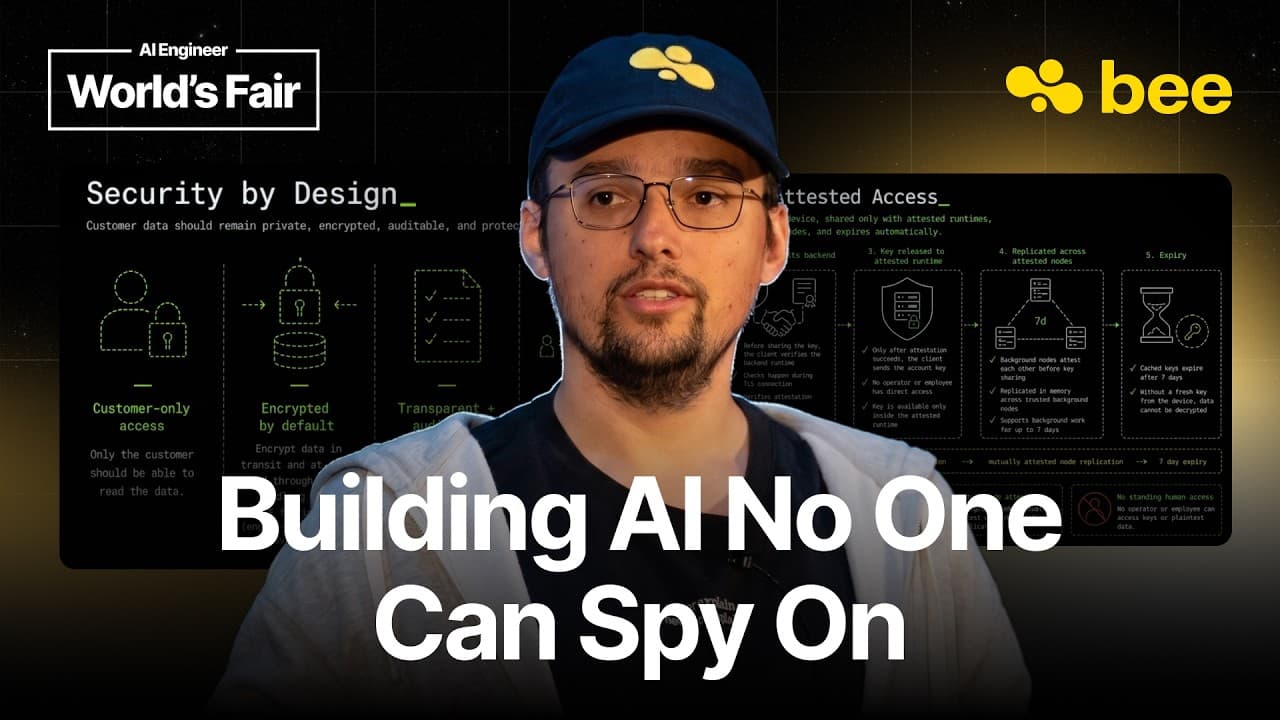
Privacy-Preserving Intelligence — Steve Korshakov, Bee (acq. Amazon)

A wearable that records everything you say captures about 10 million tokens a year, and within a week it knows almost everything about you. That is Bee, and Steve Korshakov calls it roughly the most sensitive capture device on the market, which is why his whole talk is about one guarantee: no one can read your data, not even Amazon, the company that acquired Bee eight months ago. Being inside Amazon made this harder, not easier, because an ordinary AWS customer trusts Amazon to see their data, and Bee now had to defend against that too.

Watch now