Snyk Report

Infrastructure as Code Security Insights

93% of people in a recent Snyk IaC survey said they’re still early in the IaC journey, but for the highest performers, the impact on reduced risk is significant. See the results and how you stack up below.

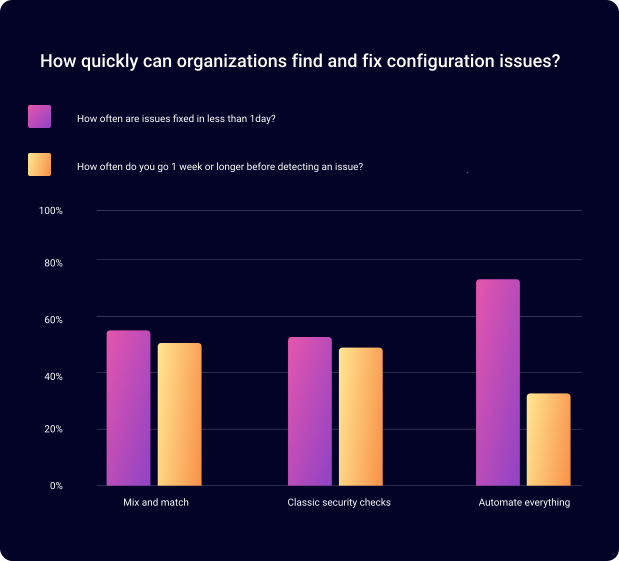
Bar chart comparing issue resolution and detection timing across mix-and-match, classic security checks, and automated everything.

What does “best in class” IaC security look like?

We grouped respondents into three categories to see how their security results differ.

Mix and match: has a mix of pre- and post-deployment checks, but no consistent methodologies.

Classic security checks: focuses on testing deployed infrastructure, using classic tools like audits and pen testing.

Automate everything: consistently automates IaC security in all release pipelines.

Those able to find and fix configuration issues the fastest were respondents treating IaC like other forms of code, subjecting it to continuous security checks from creation to deployment.

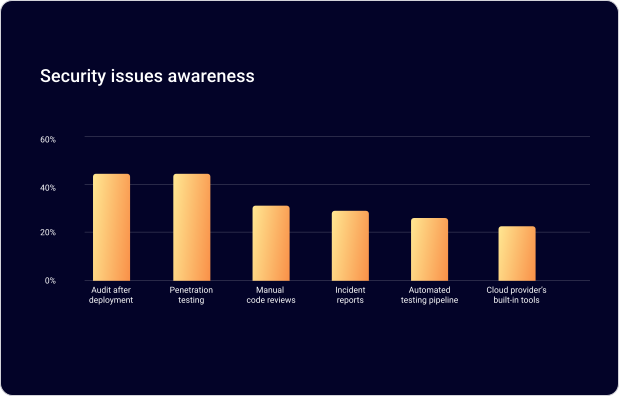
Bar chart titled “Security issues awareness” comparing awareness across six security testing and reporting methods.

How do you find out about security issues in your application and infrastructure?

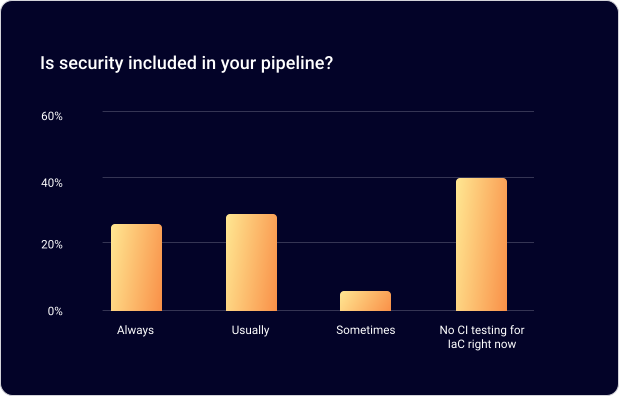
Bar chart asking “Is security included in your pipeline?” with responses Always, Usually, Sometimes, and No CI testing for IaC right now.

Do you include IaC security and misconfiguration tests in your CI pipelines?

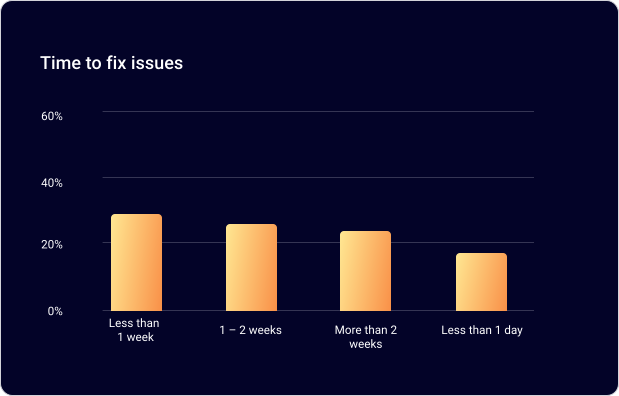
Bar chart titled “Time to fix issues,” showing the highest percentage for fixes taking less than one week and the lowest for less than one day.

How long, on average, does it take your teams to find and fix security or misconfiguration issues?

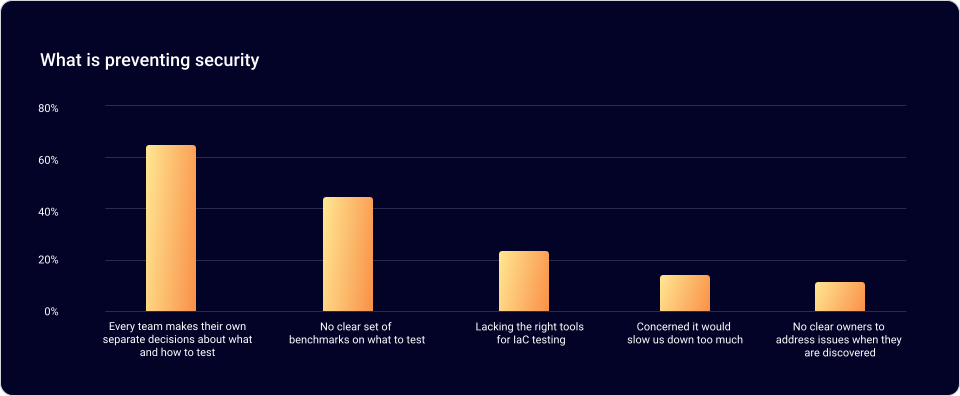
What is preventing you from always integrating security checks into the IaC testing process?

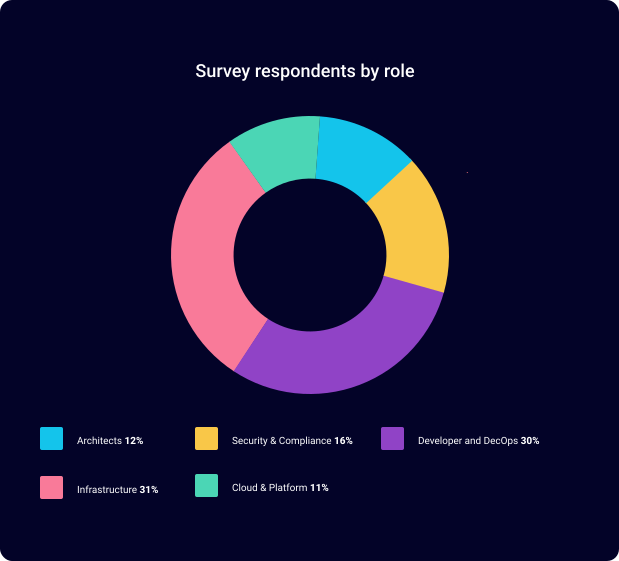
Donut chart titled “Survey respondents by role,” showing Infrastructure 31%, Developer and DevOps 30%, Security & Compliance 16%, Architects 12%, and Cloud &amp

A word about our survey

This vendor-neutral research was independently conducted by Virtual Intelligence Briefing (ViB). ViB is an interactive online community focused on emerging through rapid growth stage technologies. ViB’s community is comprised of more than 2.2M IT practitioners and decision makers who share their opinions by engaging in sophisticated surveys across multiple IT domains. 

The survey methodology incorporated extensive quality control mechanisms at three levels: targeting, in-survey behavior, and post-survey analysis. The Calculated Margin of error at a 95% confidence level is 3.9%.

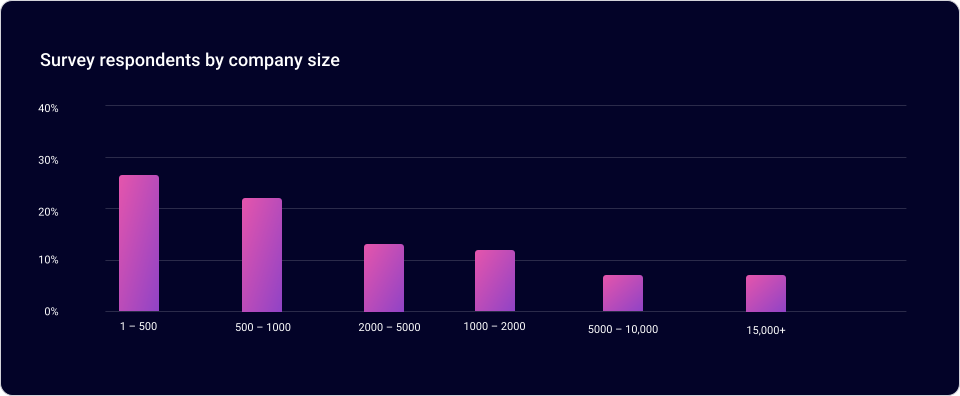
Survey respondents by company size